
Discovering Kintail: A Guide to the Wild Heart of the Scottish Highlands

Few landscapes in Britain carry the stark, dramatic authority of Kintail. Situated in the rugged northwest of the Scottish Highlands, this region is defined by precipitous ridges, deep sea-lochs, and ancient glens carved by retreating glaciers. For travellers drawn to raw wilderness, unhurried exploration, and the quiet rhythm of the natural world, Kintail offers an authentic encounter with Scotland at its most elemental.
Whether you are planning your first journey north or returning to walk ancient paths under shifting highland skies, understanding the geography, weather, and seasonal nuances of this extraordinary corner of Wester Ross is essential for a rewarding trip.
Where and What is Kintail?
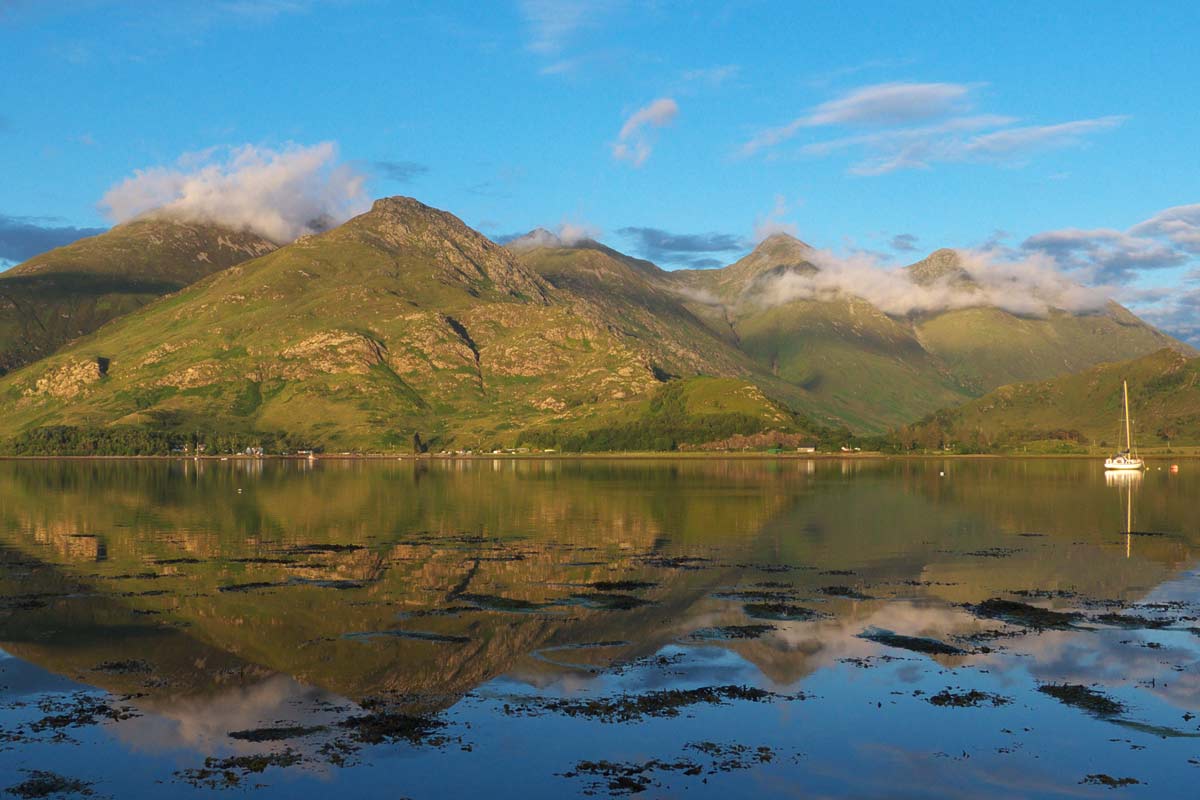
Kintail is a mountainous district lying south of Loch Carron and east of the Isle of Skye, centred around the dramatic sea-lochs of Loch Duich and Loch Long. Dominated by iconic peaks—most notably the Five Sisters of Kintail—this landscape rises steeply from sea level to jagged quartzite summits exceeding three thousand feet.
Historically, this was the heartland of Clan MacRae, whose stronghold, Eilean Donan Castle, sits sentinel at the confluence of three sea-lochs just downstream. Today, the area forms part of the National Trust for Scotland’s Kintail and Morvich estate, ensuring that the vast slopes, native woodlands, and open moorlands remain protected from overdevelopment. For visitors seeking solitude, the sheer scale of the terrain provides an immediate sense of detachment from modern life.
Planning Your Journey: Reaching the Northwest Highlands
Reaching Kintail requires intention. The journey itself serves as an introduction to the shifting topography of the Highlands.
-
By Car: Most travellers arrive via the A87, a legendary route that cuts through Glen Shiel after winding past Loch Cluanie. Driving through Glen Shiel places you directly beneath the looming walls of the Five Sisters, with towering peaks rising immediately on either side of the tarmac. The road is a double track, with passing places in stretches further north, requiring patient, attentive driving.
-
By Public Transport: While public transport is sparse, Scottish Citylink coaches operate services between Inverness and Skye, stopping at key points along the A87 such as Shiel Bridge. However, having a vehicle—or planning extensive e-bike or cycling logistics—allows for the flexibility needed to explore remote trailheads and hidden straths.
Logistics and Practicalities
-
Fuel and Provisions: Kintail is a remote wilderness area. The nearest reliable fuel and well-stocked village stores are found in Kyle of Lochalsh (approximately twenty minutes west) or Invergarry to the east. Stocking up on provisions before arriving in the glen ensures a seamless stay.
-
Connectivity: Mobile signal is notoriously patchy throughout the glens and sea-lochs. Embracing the digital detox is part of the Kintail experience, though offline map downloads and physical OS Landranger maps (specifically Sheet 33: Loch Alsh, Glen Shiel & Loch Hourn) are absolute essentials for navigation.
Experiencing the Landscape: Seasons, Light, and Weather
The character of Kintail transforms completely depending on the time of year and the prevailing weather systems moving in from the Atlantic.
The Play of Light for Photographers
Photographers are drawn to Kintail because the topography creates exceptional light conditions. Low-angled sunlight during autumn and winter rakes across the steep corries of the Five Sisters, casting deep indigo shadows while illuminating golden bracken and amber peat bogs. Because sea-lochs like Loch Duich reflect the sky, sudden breaks in stormy weather often yield dramatic, high-contrast scenes that change minute by minute.
Seasonal Breakdown
-
Spring (April to May): Often brings the most stable weather windows, crisp clear mornings, and long daylight hours. Waterfalls rush with snowmelt, and the lower slopes come alive with emerging flora.
-
Summer (June to August): Characterised by lush green landscapes, bustling coastal routes, and late evening twilights (the “peerie nights”). This is prime season for Munro bagging and coastal kayaking, though midges can be active in sheltered glens on still days.
-
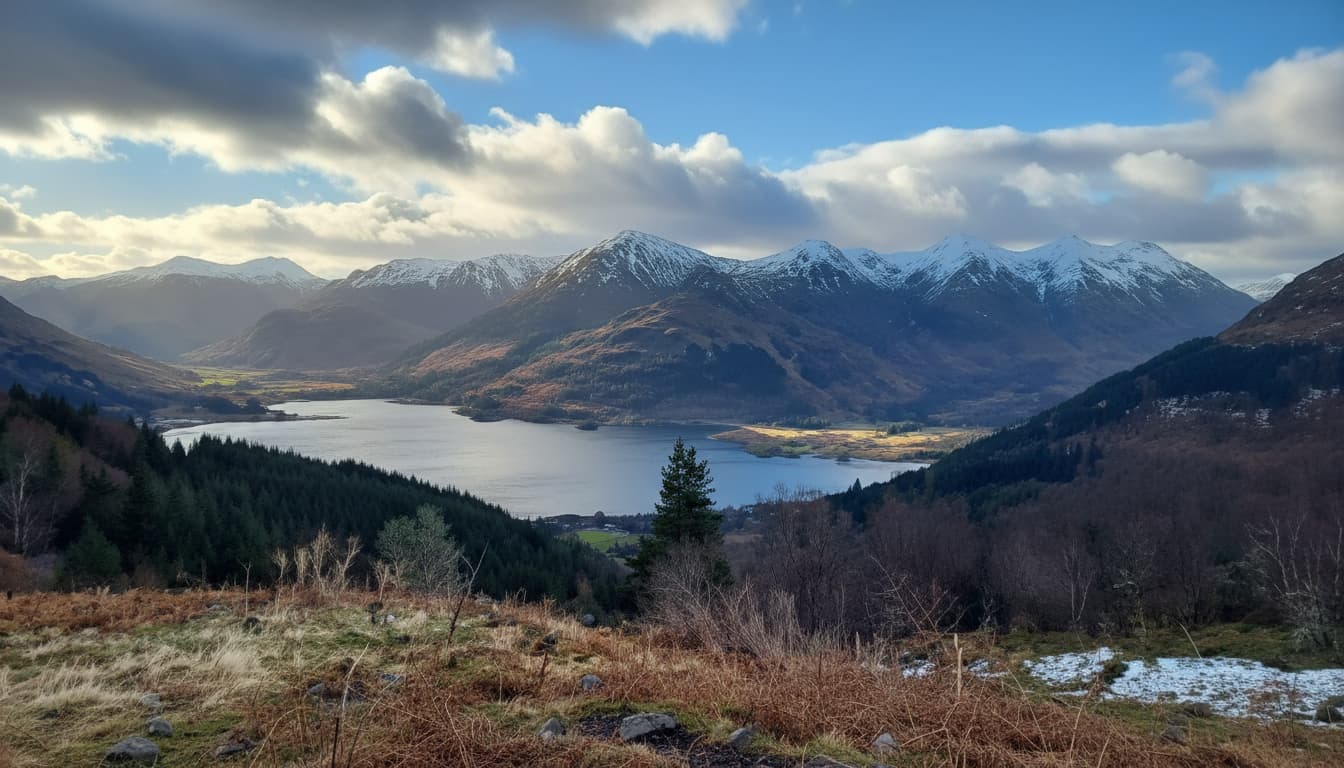
Autumn (September to November): A favourite for landscape photographers. The hills transition into russet and copper tones, red deer stags roar across the glen floors during the autumn rut, and the air turns sharp and clear.
-
Winter (December to March): Deeply atmospheric, quiet, and demanding. Snow often caps the high ridges while the sea-lochs remain mirror-calm. Shorter days make preparation vital, but the reward is absolute solitude under star-filled night skies free of light pollution.
Outdoor Pursuits: Walking, Wildlife, and Slow Travel
Kintail is built for the slow-travel ethos. Rather than rushing between packed tourist hubs, visitors here tend to anchor themselves in one location, setting out on foot, bicycle, or kayak to absorb the micro-details of the ecosystem.
Hiking the Ridges and Glens
-
The Five Sisters of Kintail: A legendary ridge walk encompassing three or more Munro summits (Sgùrr nan Spàinteag, Sgùrr na Ciste Duibhe, and Sgùrr na Carnach). It is a serious mountain undertaking requiring scrambling, navigational competence, and respect for rapid weather changes.
-
Lower Valley Walks: For those seeking gentler terrain, the route up Gleann Lichd offers an accessible path past cascading waterfalls, abandoned stone settlements, and old sheepfolds, flanked by towering cliffs.
Wildlife Watching
The estate supports a rich array of highland fauna. Golden eagles and white-tailed sea eagles patrol the upper ridges, while red deer graze openly along the roadside and lower glen floors, particularly in the quieter months. Along the tidal reaches of Loch Duich and Loch Long, otters hunt in the seaweed, and grey seals frequently bob in the quiet bays.
A Quiet Base in the Wilderness
To truly appreciate Kintail, your accommodation should act as a seamless extension of the landscape rather than a jarring modern intrusion. Staying locally allows you to catch the early morning mist rising off Loch Duich before the day’s traffic begins, or watch the twilight fade over the dark silhouette of the hills from a quiet fireside window.
For travellers looking to immerse themselves in this environment with comfort and privacy, finding a thoughtfully designed retreat is key. To explore refined, self-catering hideaways nestled directly within these wild landscapes, take a look at the curated collection at Luxury Cottages Scotland.
Conclusion
Kintail does not demand that you rush, consume, or tick off endless itineraries. Instead, it invites you to slow down, match your pace to the elements, and listen to the wind moving down the glens. By respecting the wilderness, preparing for its shifting moods, and taking time to observe the quiet majesty of Wester Ross, you unlock an experience of the Scottish Highlands that stays with you long after you return south.