Elevate your journey to the North West Highlands with our expert accommodation tips and insider advice. At Innis a Chro Luxury Cottages, we believe the perfect Scottish escape begins long before you arrive at our doorstep in Strathcarron. Whether you are curious about the essential amenities of luxury self-catering in Scotland, seeking advice on packing for the ever-changing Highland weather, or looking for the best ways to enjoy our private saunas and hot tubs, this guide is curated for the discerning traveler.

Discover how to make the most of your stay amidst the dramatic peaks of the Five Sisters of Kintail. From navigating the scenic road to Skye to choosing the right lodge for a romantic retreat or a wilderness adventure, our tips ensure your stay is seamless, sophisticated, and deeply restorative. Immerse yourself in the tranquility of our croft with the confidence of a local.

The Western Highlands of Scotland represent one of the last great wildernesses in Europe. Here, the landscape is defined by the dramatic intersection of the Kintail mountains—the legendary Five Sisters—and the deep, saltwater lochs that carve into the Atlantic coast. For the traveller seeking a “slow travel” experience, this region offers more than just scenery; it provides a rare opportunity to observe some of Britain’s most elusive species in their natural habitats.

Understanding the rhythms of the Highland landscape is essential for any wildlife enthusiast. Success in spotting golden eagles, red deer, or pine martens requires patience, local knowledge, and a strategic base that allows for immediate access to both mountain ridges and coastal shorelines.

Roe deer

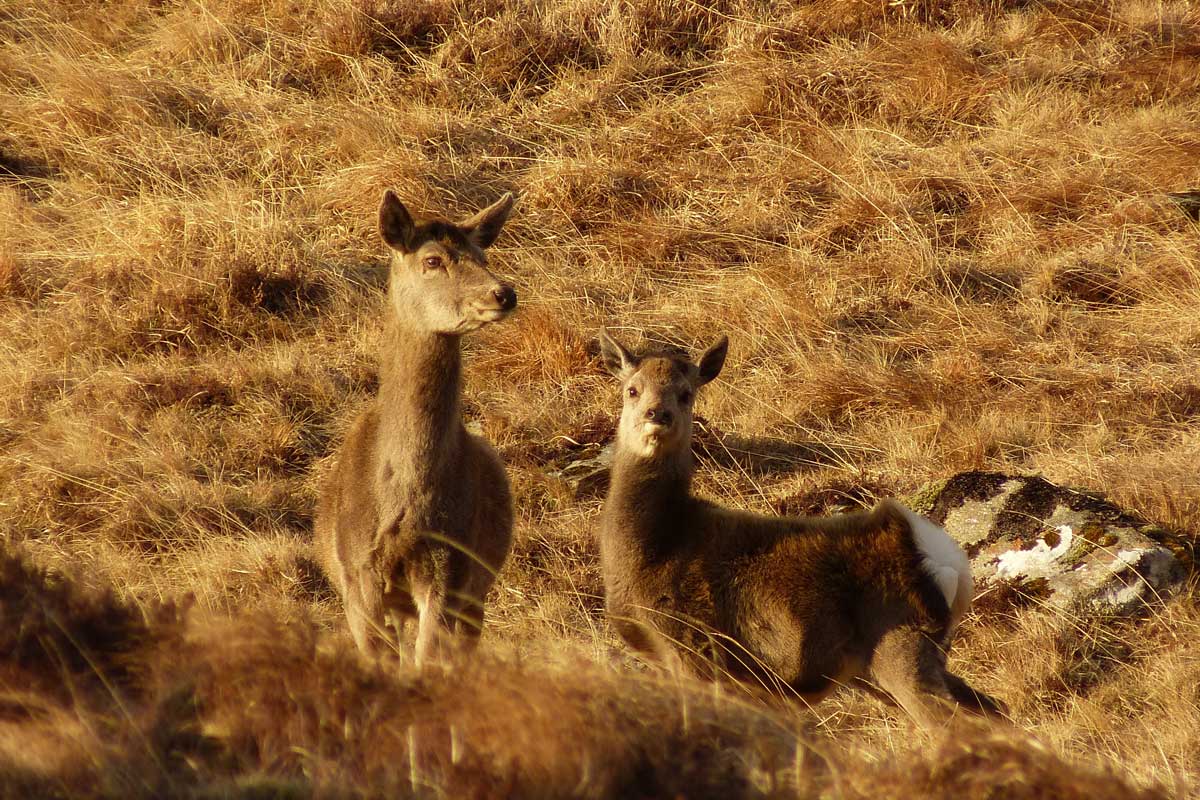
A Red Deer photographed near Innis a Chro

The Vertical Wilderness: Wildlife of the Kintail Peaks

The mountains surrounding Innis-a-Chro are not merely a backdrop; they are a functioning ecosystem. Kintail is home to some of the most iconic upland species in the UK, often found in the quiet corries and steep scree slopes away from the main hiking arterial routes.

Majestic Birds of Prey

The Golden Eagle is the undisputed monarch of the Kintail skies. These raptors require vast territories, and the rugged terrain of the Glenshiel hills provides the perfect thermal currents for soaring. To see them, one must look toward the higher ridges on clear, still mornings. Unlike the more common buzzard, which has a distinctively fanned tail, the golden eagle is larger, with longer wings and a more powerful, purposeful flight pattern.

Red Deer: The Sentinels of the Glen

Red deer are synonymous with the Scottish Highlands. While they are often seen on the lower slopes during the winter months to escape the harshest weather, they retreat to the higher plateaus during the summer. The “rut” in autumn is a particularly evocative time in Kintail, as the roar of the stags echoes across the glens. Observing these animals requires a quiet approach and an awareness of wind direction, as their sense of smell is remarkably acute.


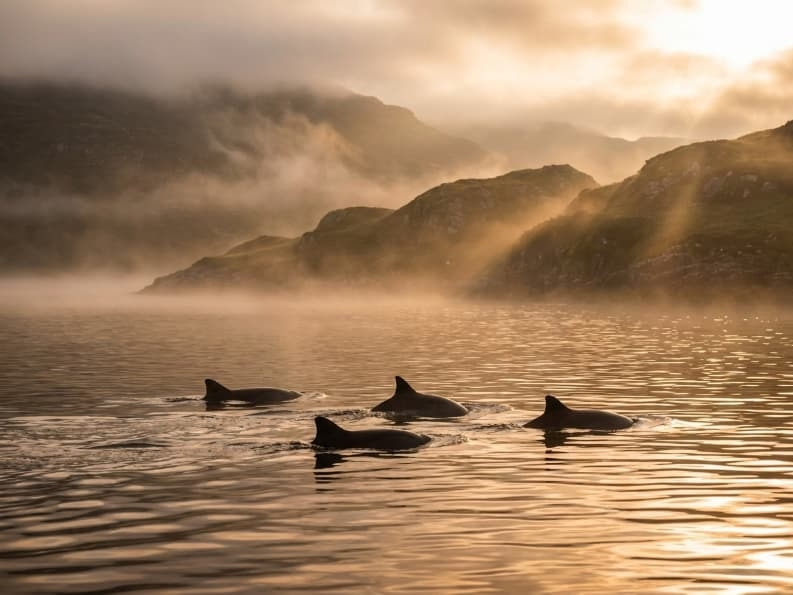
View harbour porpoises in Scotland

View harbour porpoises in Scotland

Where the Mountains Meet the Sea: The Atlantic Coastline

The proximity of the Kintail mountains to the sea creates a unique “edge” habitat. Loch Duich and the neighbouring Loch Alsh are part of a complex system of sea lochs that are rich in nutrients, supported by the North Atlantic Drift.

The Elusive European Otter

The Western Highlands are one of the best places in Europe to observe the Eurasian otter. Unlike their freshwater counterparts in the south, Highland otters are largely “maritime,” foraging in the kelp forests of the sea lochs.

Success in spotting an otter depends largely on the tide. They are most active during a rising or falling tide when the receding water reveals prey hidden in the seaweed. Look for the “V” shape in the water as they swim, or listen for the distinctive whistling call of a mother to her cubs. The rocky outcrops along the shores of Loch Duich offer excellent vantage points for quiet observation.

Marine Giants and Coastal Visitors

The Atlantic coast is a corridor for marine megafauna. From the shores nearby, particularly as one moves toward the Kyle of Lochalsh and the Skye bridge, it is possible to see:

  • Harbour Porpoises: Often seen surfacing briefly in the calmer waters of the lochs.

  • Common and Grey Seals: Frequently found hauled out on the skerries (rocky islets) at low tide.

  • Basking Sharks: During the warmer summer months, these gentle giants can sometimes be seen from the shore as they filter-feed on plankton.


The Secretive Inhabitants of the Highland Woodlands

The remnants of the ancient Caledonian pine forest and the lush hazel and birch woods of the west coast provide cover for some of Scotland’s rarest mammals.

The Return of the Pine Marten

Once nearly extinct in the UK, the pine marten has made a significant recovery in the Western Highlands. These cat-sized members of the weasel family are arboreal and notoriously shy. They are most active at dawn and dusk. In areas like Kintail, where human density is low and the woodland is maturing, they are increasingly common. Observing them requires staying in a quiet, secluded location where the transition between garden and forest is seamless.

Red Squirrels

While the invasive grey squirrel has dominated much of the UK, the Western Highlands remains a stronghold for the native red squirrel. These agile climbers are a joy to watch as they forage for nuts and seeds. The mixed woodlands around the base of the Five Sisters of Kintail provide an ideal habitat for them.


Seasonal Rhythms: When to Visit for Wildlife

Wildlife photography and observation in the Highlands are heavily dictated by the seasons and the shifting quality of light.

Spring and Early Summer

This is the peak season for birdlife. The hills are alive with the calls of Meadow Pippits and Wheatears, while the sea cliffs further along the coast begin to bustle with nesting seabirds. It is also the best time to see newborn deer calves hidden in the long grass.

Autumn

The landscape turns to a palette of burnt orange and deep purple. The deer rut is the headline event, but this is also an excellent time for fungi foraging and observing the salmon run in the local rivers as they return to their spawning grounds.

Winter

The Highlands in winter are stark and beautiful. While some species hibernate or migrate, others, like the mountain hare and the ptarmigan, change their coats to white to blend with the snow. The lower light levels and shorter days often bring larger animals down from the high peaks closer to the glens, making them easier to spot from the comfort of a valley-floor base.


The Importance of a Quiet Base: Staying in Kintail

To truly experience the wildlife of the Western Highlands, one must move away from the high-traffic tourist hubs. Staying within the Kintail estate or the immediate surrounding glens allows for a deeper immersion in the environment.

A base like Innis-a-Chro provides a unique advantage. Situated at the head of the glen, it sits within the natural corridors used by animals moving between the high ground and the water. It is not uncommon to see deer grazing just beyond the window or to hear the call of an owl as night falls over the mountains. This proximity allows for “stationary wildlife watching”—the practice of letting the wildlife come to you by simply being present and still in a wild place.

Practical Tips for the Wildlife Photographer

  1. Optical Equipment: A good pair of 8×42 binoculars is essential. For photographers, a lens with at least 400mm focal length is recommended to capture images without disturbing the animals.

  2. Clothing: The weather in the Highlands is famously unpredictable. Muted colours (greens, browns, and greys) are vital for blending into the landscape.

  3. Respect the Environment: Always follow the Scottish Outdoor Access Code. Maintain a respectful distance from all wildlife, particularly during breeding and nesting seasons.

Exploring Further: Day Trips from Kintail

While Kintail itself is a biodiversity hotspot, its position makes it an ideal launchpad for exploring the wider Atlantic coast:

  • The Bealach na Bà and Applecross: A journey over the UK’s highest road leads to a coastline famous for its rugged beauty and frequent sightings of red deer and coastal birds.

  • The Isle of Skye: Just a short drive away, the “Winged Isle” offers opportunities to see White-tailed Sea Eagles, which have a massive wing span and are often seen patrolling the cliffs.

  • Eilean Donan and Loch Alsh: The nearby castle is not just a historical site; the surrounding waters are a prime location for spotting otters and herons.


Conclusion: The Art of Slow Discovery

The Western Highlands do not give up their secrets easily. The beauty of this region lies in its subtlety—the flash of a pine marten’s tail, the distant silhouette of an eagle, or the quiet ripple of an otter in the loch. By choosing a base in the heart of Kintail, you are not just visiting the Highlands; you are becoming part of the landscape for a time.

Whether you are a professional photographer or simply someone seeking a connection with the natural world, the combination of the mountains and the Atlantic coast provides a profound sense of peace and a reminder of the raw power of nature.


Discover the quiet beauty of the Highlands.

To learn more about the unique landscape of Kintail and to plan your stay in our secluded mountain retreat, explore our guides and accommodation options.

Explore Innis-a-Chro and the Western Highlands

The Scottish Highlands often conjure a specific set of images: mist clinging to jagged peaks, hidden lochs reflecting an ever-changing sky, and a silence so profound it feels tangible. For many travellers, the challenge isn’t deciding to visit, but deciding where to anchor themselves in a landscape that spans nearly 10,000 square miles.

While the Isle of Skye and the North Coast 500 command much of the international spotlight, those seeking a deeper, more authentic connection with the landscape are increasingly turning to Kintail. Located in the Northwest Highlands, this region serves as the gateway to the Atlantic seaboard and contains some of the most dramatic mountain architecture in the British Isles.

Whether you are a photographer chasing the “blue hour,” a hiker eyeing the Five Sisters, or a slow-traveller looking to escape the digital hum, this guide explores how to navigate and appreciate the raw beauty of Kintail and beyond.


Why Kintail is the Heart of the Scottish Highlands

Kintail is defined by the meeting of three sea lochs: Loch Duich, Loch Long, and Loch Alsh. This geographic convergence creates a microclimate and a visual drama that is rare even by Highland standards. Unlike the flatter moorlands of the east, the terrain here is vertical, ancient, and uncompromising.

The Geography of the Five Sisters

The most iconic landmark in the district is the Five Sisters of Kintail. This ridgeline consists of five distinct summits (three of which are Munros, or mountains over 3,000 feet) that rise sharply from the shores of Loch Duich. For outdoor enthusiasts, the ridge offers one of the finest hill-walking days in Scotland, providing a 360-degree panorama that stretches from the Cuillin of Skye to the peaks of Torridon.

A Gateway to the West

Kintail occupies a strategic position. It is far enough from the main tourist hubs to feel secluded, yet it sits perfectly between the Great Glen and the Skye Bridge. This makes it a practical base for those who want to explore Eilean Donan Castle, the Applecross Peninsula, and the falls of Glomach without spending their entire holiday behind a steering wheel.


Loch Alsh

Planning Your Visit: Seasons and Light

Understanding the rhythm of the Highlands is essential for a successful trip. The weather here is not something to be endured, but rather the very thing that gives the landscape its character.

The Best Time for Photographers

For those focused on Highland landscape photography, the shoulder seasons—late spring and autumn—are often superior to midsummer.

  • April to May: The air is often at its clearest, and the higher peaks may still carry a dusting of snow, providing a stark contrast against the budding greenery of the glens.

  • October to November: The bracken turns a deep russet, and the light stays low in the sky all day, casting long, dramatic shadows across the glens.

Navigating the Highland Climate

It is a local truism that you can experience four seasons in a single hour. When packing, the “layering system” is not just advice; it is a necessity. Waterproof shells, merino wool base layers, and sturdy, waterproof boots are the standard uniform for anyone venturing off the tarmac.

Pro Tip: Always check the MWIS (Mountain Weather Information Service) before heading out. Valley weather rarely reflects what is happening at 900 metres.


Slow Travel: Beyond the Typical Tourist Trail

Slow travel is about quality of experience over quantity of sights. Instead of rushing to tick off every viewpoint on a map, consider spending a full day within a five-mile radius of your accommodation. In Kintail, this approach reveals details most visitors miss.

Glen Elchaig and the Falls of Glomach

While most tourists stop at the roadside viewpoints, the interior of Kintail holds hidden gems like the Falls of Glomach. As one of the highest waterfalls in Britain, it is tucked away in a remote fold of the hills. The trek to reach it is demanding, but the reward is a sense of isolation and grandeur that represents the true spirit of the Highlands.

Wildlife Watching

The Northwest Highlands are a stronghold for species that have struggled elsewhere.

  • Red Deer: Often seen on the lower slopes of the hills during the winter and high on the ridges in summer.

  • Pine Martens: Elusive but present in the wooded areas around Loch Duich.

  • Golden Eagles: Often spotted soaring over the high ridges of the Kintail peaks.

  • Otters: If you sit quietly by the shores of the sea lochs at dawn or dusk, you may be lucky enough to see an otter foraging among the kelp.


The Practicalities of a Highland Stay

When researching accommodation in the Scottish Highlands, the choice often comes down to convenience versus atmosphere. To truly appreciate the scale of the North West, staying in a location that allows you to start your hike or photo session from your front door is invaluable.

Finding an Authentic Base

Choosing a self-catering option provides the flexibility that hotel schedules lack—essential for photographers waiting for the light or hikers returning late from a long day on the hills. Seek out dwellings that use natural materials like stone and wood, which echo the surrounding environment.

Innis-a-Chro, for example, is situated in a way that respects the topography of the glen, offering a quiet, elevated perspective over the landscape. Finding a base that prioritises silence and unobstructed views can transform a standard holiday into a restorative retreat.

Local Amenities and Supplies

Kintail is remote, but it is not isolated. The nearby village of Kyle of Lochalsh provides essential services, including supermarkets, a pharmacy, and a railway station. For a more local flavour, the community-run shops and small cafes in the surrounding glens offer high-quality Scottish produce, from smoked seafood to Highland beef.


Driving and Logistics in the Northwest

Driving in the Highlands requires a different mindset than driving on motorways. Many roads in the Kintail and Applecross areas are single-track roads with passing places.

  1. Passing Places: These are not for parking. Use them to allow following traffic to overtake or to let oncoming vehicles pass.

  2. Fuel: Always keep your tank at least half full. Fuel stations can be sparse once you venture off the A87.

  3. Livestock: It is common for sheep or highland cattle to wander onto the road. Drive at a speed that allows for sudden stops, especially in low visibility.


Iconic Nearby Destinations

Using Kintail as your primary base allows for manageable day trips to some of Scotland’s most famous landmarks.

Eilean Donan Castle

Just a few minutes’ drive from the heart of Kintail, this 13th-century castle sits at the point where three lochs meet. While it is one of the most photographed spots in Scotland, visiting early in the morning or late in the evening allows you to appreciate the architecture without the midday crowds.

The Applecross Peninsula

For those who enjoy a dramatic drive, the Bealach na Bà is a historic cattle pass that rises to over 2,000 feet via a series of Alpine-style hairpins. The views from the top across to the Isle of Skye are unparalleled.

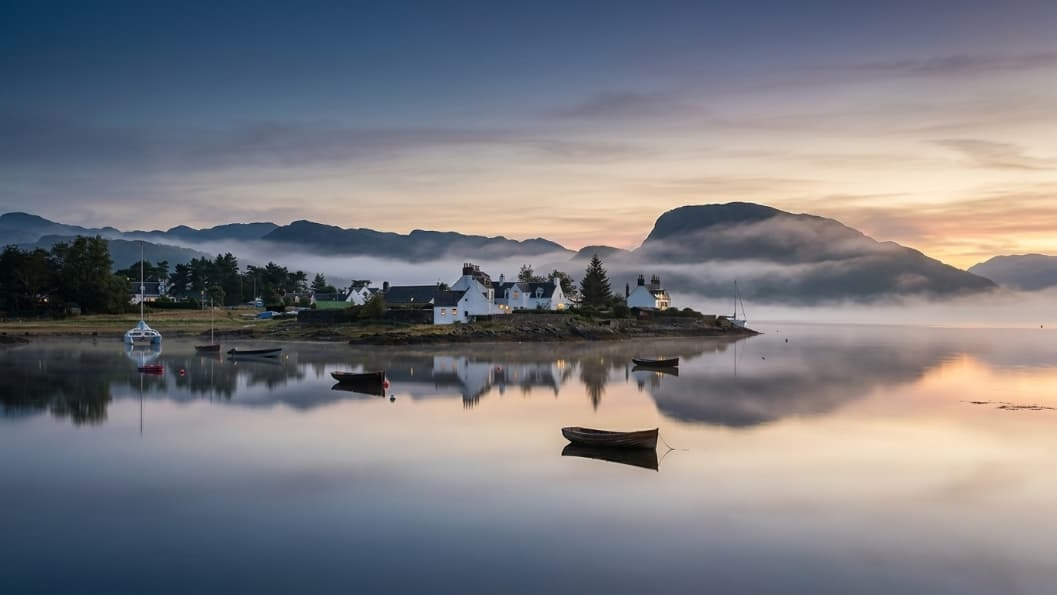
Plockton

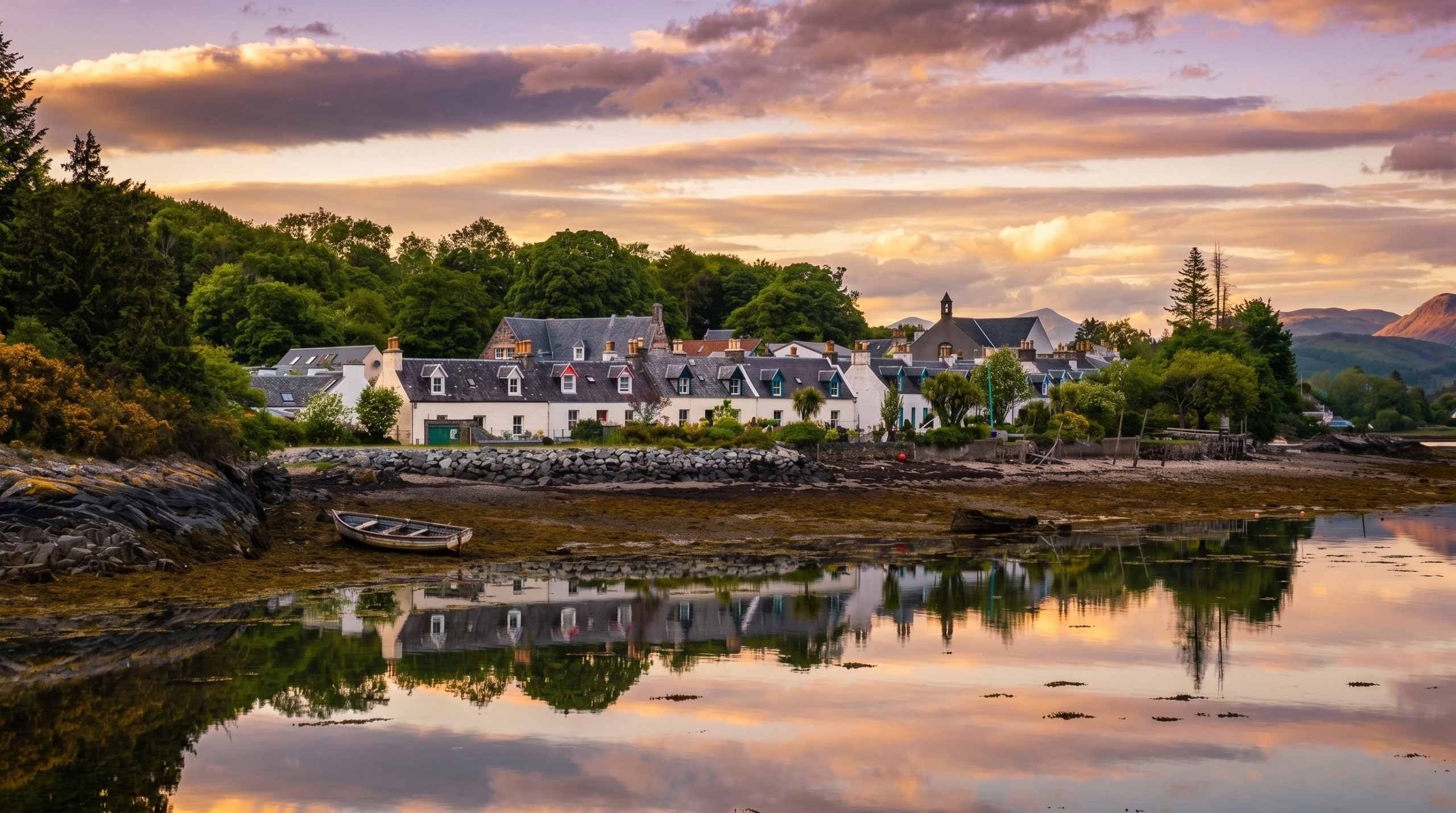
A short drive north takes you to the “Jewel of the Highlands.” Plockton is a sheltered village known for its palm trees (thanks to the North Atlantic Drift) and its calm, turquoise waters. It is an excellent spot for sea kayaking or a gentle coastal walk.


A Note on Responsible Tourism

The beauty of the Scottish Highlands is fragile. As visitors, we have a collective responsibility to preserve it for the future.

  • Leave No Trace: Ensure all litter is taken home.

  • Stay on Paths: To prevent erosion, particularly in peatland and mountain environments, stick to established trails where possible.

  • Support Local: Buying from local bakeries, artists, and guides ensures that the Highland communities remain vibrant and sustainable.


Conclusion: Finding Stillness in the Peaks

The Scottish Highlands are more than just a destination; they are an experience that demands you slow down. In Kintail, the mountains don’t just provide a backdrop—they dictate the pace of life. Whether you are scaling the heights of the Five Sisters or simply watching the rain curtains move across Loch Duich from the comfort of a well-appointed cottage, the region offers a rare opportunity to disconnect from the modern world and reconnect with nature.

Planning your journey here requires a balance of preparation and spontaneity. While you should map out your hikes and book your stay in advance, leave room for the moments that can’t be planned—the sudden appearance of a rainbow over a glen, or the silence of a mist-covered morning.

If you are ready to begin your Highland story, we invite you to explore the quiet corners of Kintail and discover the comfort of a home away from home.

Explore the beauty of the Highlands and find your perfect base at Innis-a-Chro Luxury Cottages.

For many, the Scottish Highlands are defined by the fleeting glimpse of a glen from a car window or a quick stop at a roadside viewpoint. Yet, for those who prefer the philosophy of slow travel, the true essence of this landscape is only revealed when you stop moving and start observing.

The district of Kintail, located in the northwest Highlands, offers a rare kind of sanctuary. It is a place where the scale of the mountains—most notably the Five Sisters of Kintail—is matched only by the profound silence of the glens. Whether you are a photographer chasing the “blue hour” across a sea loch or a hiker seeking the solitude of a remote Munro, Kintail serves as a masterclass in Highland beauty.

In this guide, we explore how to immerse yourself in this iconic landscape, from the thundering heights of the Falls of Glomach to the quiet history of the Glenelg peninsula.


Why Kintail is the Ultimate Base for Highland Exploration

Kintail is often described as the gateway to the Isle of Skye, but to treat it merely as a thoroughfare is to miss one of Scotland’s most dramatic regions. Managed largely by the National Trust for Scotland, the area is a protected haven of ridges, rivers, and ancient history.

Positioning yourself here allows for a deeper connection to the land. You are within striking distance of the west coast’s most famous landmarks, yet tucked away from the peak-season crowds. It is a landscape that demands time—time to watch the light shift across Loch Duich and time to navigate the winding “Road to the Isles.”

The Geography of Solitude

The region is defined by Glen Shiel, a deep, glaciated valley flanked by steep-sided mountains. To the north lie the Five Sisters; to the south, the equally formidable South Shiel Ridge. For the outdoor enthusiast, this creates a natural playground of high-altitude traverses and low-level riverside rambles.


Essential Experiences: Walking and Hiking in Kintail

Walking in the Highlands is less about “conquering” peaks and more about understanding the terrain. Kintail offers routes for every level of fitness, provided you come prepared for the ever-changing Scottish weather.

1. The Five Sisters of Kintail

This is one of the most celebrated ridge walks in Scotland. Spanning three Munros (mountains over 3,000 feet), the traverse offers panoramic views that stretch toward the Cuillin of Skye and the peaks of Torridon.

  • Searcher’s Tip: This is a strenuous day taking 8–10 hours. For a shorter but equally rewarding view, consider the ascent of Sgùrr an Airgid (the Peak of Silver), which offers a stunning perspective over Loch Duich with significantly less ascent.

2. The Falls of Glomach

Hidden in a remote fold of the hills, the Falls of Glomach are among the highest and most isolated in Britain. There is no easy way to reach them; the most common route is a 12-mile round trip from Morvich. The reward is a 113-metre drop into a narrow, misty gorge that feels entirely untouched by the modern world.

3. The Affric Kintail Way

For those interested in long-distance trekking, this 44-mile trail links Loch Ness to the west coast. The final stage, which descends through Gleann Lichd, is arguably the most spectacular, as the valley floor opens up to reveal the towering mass of Beinn Fhada.


Capturing the Light: A Photographer’s Perspective

Photographers are drawn to Kintail for its legendary “mood.” Unlike the starker landscapes of the east, the west Highlands are characterised by moisture and Atlantic weather systems, which create incredible atmospheric depth.

The Best Photography Spots in Kintail

  • Eilean Donan Castle: Located just minutes from the heart of Kintail, this 13th-century icon sits at the meeting point of three sea lochs. While popular, it never loses its magic, especially during a high tide at sunset.

  • Loch Cluanie: As you enter Glen Shiel from the east, the shores of Loch Cluanie provide excellent foreground interest, with old tree stumps and reflections of the surrounding peaks.

  • The Mam Ratagan Pass: For a classic “slow travel” detour, take the narrow road over Mam Ratagan toward Glenelg. At the summit, there is a viewpoint that offers perhaps the best vista of the Five Sisters reflected in the waters below.

Note on Light: In the Highlands, the “Golden Hour” can last for several hours in the height of summer, while winter brings a low, raking light that picks out every texture of the heather and rock.


Highland Wildlife and the Changing Seasons

Kintail is a living landscape. Depending on when you visit, the flora and fauna provide a completely different narrative.

Wildlife Spotting

  • Red Deer: These are the true monarchs of the glen. In the autumn, the glens echo with the “roar” of the stags during the rut. In winter, they often descend to the lower ground near the roadside to escape the deep snow on the peaks.

  • Golden Eagles: Keep your eyes on the ridges of the Five Sisters. These majestic birds of prey are resident year-round and can often be seen soaring on thermals.

  • Otters and Seals: Loch Duich is a sea loch, meaning you can often spot common seals basking on the rocks or otters hunting along the shoreline at dawn.

The Seasonal Palette

  • Spring: A time of vibrant greens and the arrival of migratory birds like the wheatear and whinchat.

  • Late Summer: The hillsides turn a deep, royal purple as the heather comes into bloom.

  • Autumn: Expect a tapestry of burnt oranges and deep ochres. This is often the best time for walking, as the air is crisp and the “midges” have finally departed.

  • Winter: The peaks take on an alpine character. While high-level walking requires specialist equipment (crampons and ice axes), the low-level glens offer a stark, quiet beauty.


Slow Travel: Exploring Beyond the Main Road

To truly experience the Highlands, one must occasionally turn off the A87. The Glenelg peninsula is a perfect example of a hidden gem. Accessible via the Mam Ratagan pass or the historic Glenelg Ferry (the last manually operated turntable ferry in the world), this area feels like a step back in time.

Here, you can visit the Glenelg Brochs—Dun Telve and Dun Troddan. These iron-age drystone towers are among the best-preserved in Scotland, standing as silent witnesses to over 2,000 years of Highland history.


Planning Your Highland Retreat

When researching where to stay, consider the value of a “home base” rather than moving every night. Choosing a central location in Kintail allows you to explore Skye one day, the Applecross peninsula the next, and the deep wilderness of Glen Affric the day after.

Staying locally in an area like Strath Croe provides an immersive experience. Imagine returning from a day on the hills to the warmth of a fire, watching the stars emerge in a “dark sky” area with no light pollution, and waking up to the sound of the river running past your door.

Practical Logistics for International Visitors

  • Getting Here: Most travellers arrive via Inverness (approximately 1.5 – 2 hours away) or Fort William. A car is highly recommended to explore the hidden corners of the glens.

  • Provisioning: While remote, nearby villages like Kyle of Lochalsh offer full amenities. However, part of the charm of a Highland stay is stocking up on local produce—look out for roadside stalls selling fresh eggs or seafood from the local lochs.

  • Access Code: Scotland operates under the “Right to Roam.” This allows wonderful freedom to explore, provided you follow the Scottish Outdoor Access Code: respect the land, leave no trace, and keep dogs on leads near livestock.


Discover the Magic of Kintail

The Scottish Highlands are not just a destination; they are a feeling. It is the crunch of frost underfoot, the taste of peat-filtered water, and the humbling scale of mountains that have stood for millennia. Kintail represents the very best of this—a place where you can find both adventure and absolute stillness.

As you plan your journey, remember that the Highlands are best enjoyed at a leisurely pace. Leave room in your itinerary for the unplanned stop, the long conversation with a local, and the quiet afternoon spent simply watching the clouds roll over the ridge.

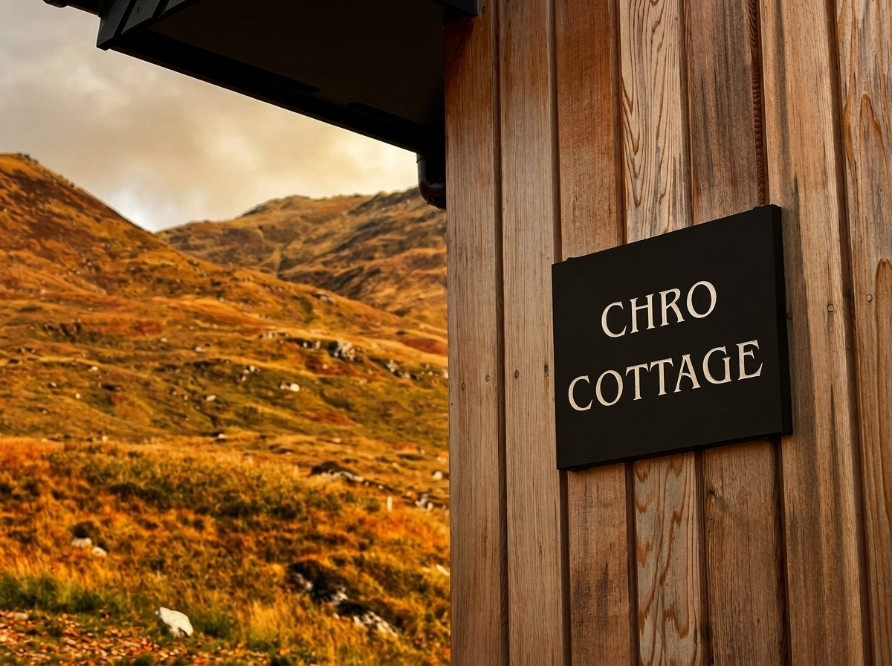
With spring approaching, these remaining weeks in April and May represent a rare opening to experience the glen as it wakes. April offers the stark, dramatic clarity of the early season, while May sees the landscape soften into a deep, vibrant green. We have immediate availability for Innis Cottage on the weeks of April 18th and 25th, and May 16th and 23rd. Chro Cottage has one remaining week available commencing May 23rd.

To begin planning your own Highland escape and to discover a secluded base nestled at the foot of the Five Sisters, explore the possibilities at Innis-a-Chro Luxury Cottages.

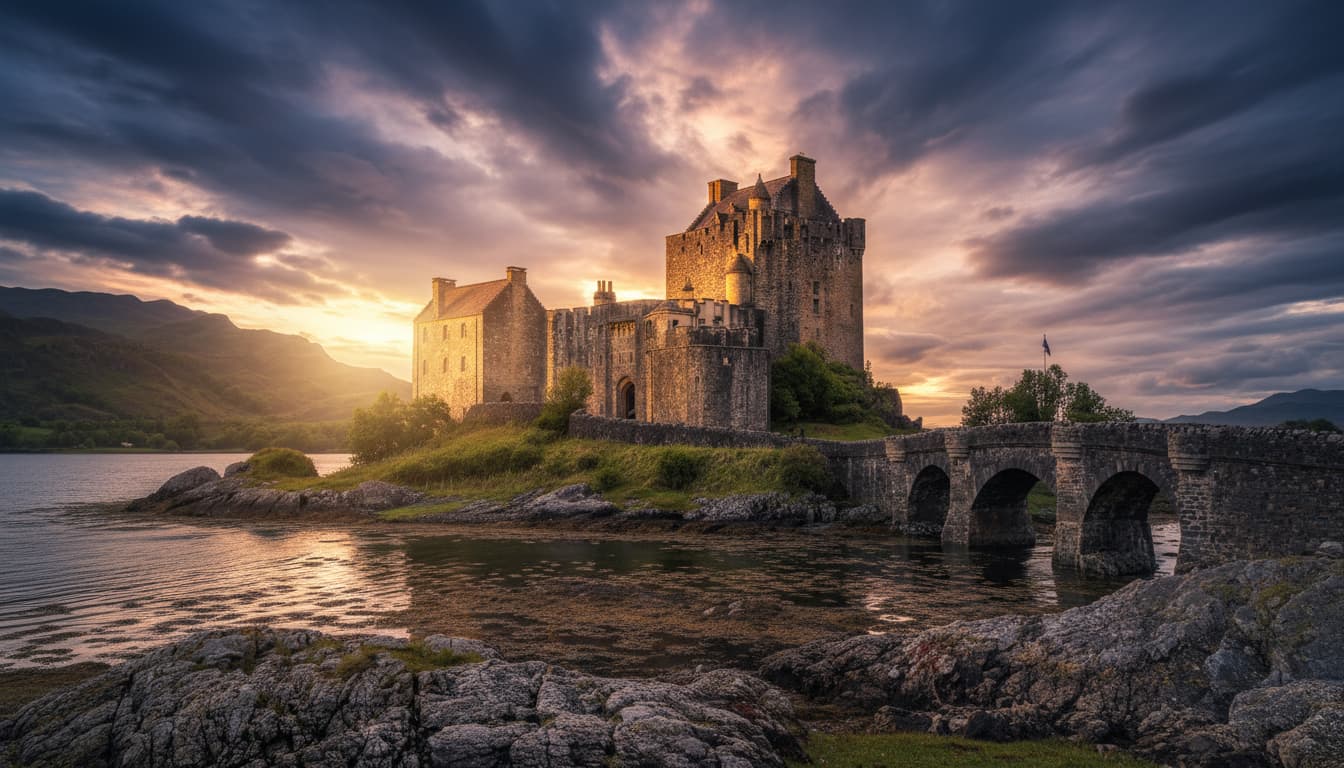
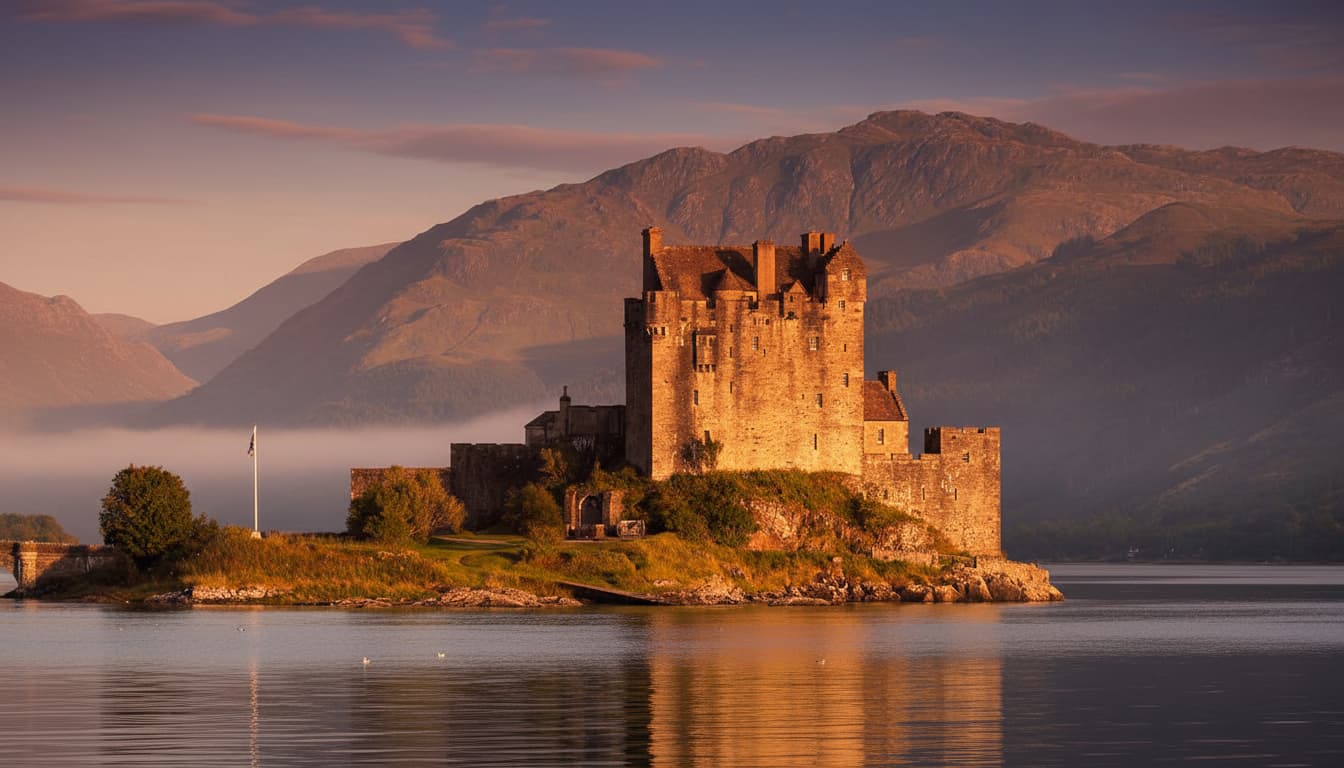
There is a specific moment when driving west through the Kintail mountains where the road drops, the vista opens, and the silhouette of Eilean Donan Castle appears against the mirror-like waters of Loch Duich. It is a view that has launched a thousand postcards and served as the backdrop for cinematic epics, yet no photograph truly captures the atmosphere of the sea air and the silence of the surrounding glens.

For those planning a journey to the Scottish Highlands, Eilean Donan is often the primary waypoint. However, beneath its photogenic exterior lies a story told in staggering numbers—from the centuries it spent in ruin to the hundreds of thousands of visitors who cross its stone bridge today.

Understanding the scale of this landmark is the first step in planning a visit that moves beyond the typical tourist experience and into the heart of Highland history.


The Weight of History: 800 Years of Conflict

Eilean Donan’s story is not one of continuous grandeur, but of survival. The numbers behind its timeline reveal a fortress that was fought over, destroyed, and eventually reborn.

A Stronghold of Three Lochs

The castle sits at the unique confluence of three sea lochs: Loch Duich, Loch Long, and Loch Alsh. This was not a choice made for the view, but for naval dominance. In the 13th century, the first fortified wall was built to protect the lands of the Earl of Ross against Norse raiders.

The 1719 Siege: 27 Barrels of Gunpowder

The most pivotal number in the castle’s history is 1719. During the Jacobite Rising, the castle was garrisoned by Spanish troops supporting the Stuart claim to the throne. The British Royal Navy dispatched three frigates—the Worcester, the Enterprise, and the Flamborough—to end the occupation.

After a heavy bombardment, the government forces discovered 343 barrels of gunpowder inside. They used 27 of those barrels to demolish what remained of the structure. For the next 200 years, Eilean Donan existed only as a jagged ruin, a silhouette of stone left to the elements.

20 Years of Restoration

The castle we see today is a testament to the vision of Lt. Col. John Macrae-Gilstrap, who purchased the island in 1911. It took 20 years of meticulous labor (from 1912 to 1932) to restore the castle to its former glory. Legend suggests the plans were revealed to his clerk of works, Farquhar Macrae, in a dream—a fittingly romantic origin for such an ethereal building.


Eilean Donan Castle - Visitor Statistics

Eilean Donan in the Modern Era: The Visitor Statistics

Today, Eilean Donan is a powerhouse of Highland tourism. While the surrounding area of Kintail remains rugged and sparsely populated, the castle itself is a hive of activity.

  • 600,000 Annual Visitors: Roughly 600,000 people from across the globe visit the castle each year.

  • The Peak Hours: Between 10:00 and 15:00, the car park often reaches capacity as tour buses arriving from Inverness and Skye converge.

  • The Bridge: The iconic arched bridge is one of the most photographed structures in the UK, yet it was only added during the 20th-century reconstruction to allow easier access for visitors.

Travel Tip: To experience the castle as the “Slow Travel” enthusiast intends, aim to arrive before 09:30 or after 17:00. The evening light against the mountains of Kintail provides a much more intimate atmosphere for photography and reflection.


A Photographer’s Guide: Capturing the Light

For photographers, Eilean Donan is both a dream and a challenge. Because it is surrounded by water, the visual character of the castle changes entirely with the tide and the Scottish weather.

The Golden Hours

The castle faces south-west, meaning the “Blue Hour” just after sunset is particularly magical here. During the winter months, the sun sets behind the hills of Skye, casting long, dramatic shadows across the loch. In summer, the late evening light (which can last until 22:00 in June) illuminates the stone walls with a soft, orange glow.

Composition Beyond the Bridge

While the classic shot is from the main shoreline, try walking further along the A87 towards the Dornie bridge. From this elevation, you can frame the castle against the Five Sisters of Kintail, providing a sense of scale that shows how the fortress is dwarfed by the surrounding peaks.


Why Kintail is the Ideal Base for Discovery

Many travellers treat Eilean Donan as a “stop-off” on the road to the Isle of Skye. However, the true beauty of this region lies in staying a while. By choosing to base yourself in Kintail, you gain a perspective that day-trippers miss.

Located just a short drive from the castle, the glens of Kintail offer a sanctuary of silence. After the last tour bus has departed, the area returns to the locals—and the wildlife. Red deer frequently descend from the heights of Beinn Fhada, and otters can often be spotted in the kelp beds of the sea lochs.

The Benefits of a Local Base

Staying locally at a place like Innis-a-Chro allows you to time your visits perfectly. You can enjoy a slow morning watching the mist lift from the River Chro before driving the few miles to the castle before the crowds arrive.

It also provides the opportunity to explore the “lesser” numbers of Kintail:

  • The Five Sisters: A world-class ridge walk featuring three Munros (peaks over 3,000ft).

  • Falls of Glomach: One of the highest waterfalls in Britain, accessible only by a dedicated hike.

  • Zero Crowds: While 600,000 people visit the castle, only a fraction venture into the deep glens nearby.


Planning Your Visit: Logistics and Seasons

Season What to Expect Best For
Spring (April – May) Crisp air, nesting birds, and the first dusting of green on the hills. Walking and photography.
Summer (June – August) Longest daylight hours; busiest visitor numbers. Family trips and boat tours.
Autumn (Sept – Oct) Deep oranges and purples in the heather; rutting deer. Dramatic landscapes and lower crowds.
Winter (Nov – March) Snow-capped peaks and moody, atmospheric lighting. Solitude and “Slow Travel.”

Getting There

The castle is located at Dornie, on the main A87. If you are travelling from the south, the drive through Glen Shiel is considered one of the most beautiful in Europe. For those arriving by train, the nearest station is Kyle of Lochalsh, which is a short taxi or bus ride from the castle gates.


Final Thoughts: The Spirit of Eilean Donan

Eilean Donan is more than just a collection of stone and impressive statistics. It is a symbol of the Highlands’ ability to endure. Whether it is the 27 barrels of powder that brought it down or the 20 years of labor that brought it back, the castle represents a bridge between Scotland’s turbulent past and its peaceful, welcoming present.

As you plan your journey, remember that the best way to see the Highlands is not through a car window, but by stepping into the landscape. Take the time to linger, to walk the quiet glens of Kintail, and to watch the tide rise and fall against the castle walls.

Would you like to discover the perfect base for your Highland adventure? Explore our quiet corner of Kintail and find a place to rest after your day of discovery at Innis-a-Chro Luxury Cottages.

The moment you crest the pass at the top of Glen Shiel and begin the long, winding descent toward Loch Duich, the character of the Scottish landscape shifts. The rolling moors of the central Highlands give way to something more vertical, more ancient, and undeniably more dramatic.

This is Kintail, a region often described as the gateway to the Isle of Skye, yet one that deserves far more than a fleeting glance from a car window.

For the traveller seeking a genuine connection with the landscape—the photographer chasing the “blue hour,” the hillwalker eyeing a jagged ridgeline, or the soul in need of slow travel in Scotland—Kintail offers a rare sense of scale. It is a place where the mountains don’t just sit on the horizon; they loom directly over the sea lochs, creating a theatre of light, water, and stone.

In this guide, we explore why Kintail and the surrounding Northwest Highlands represent the pinnacle of the Scottish wilderness experience and how to immerse yourself in its quiet, rugged beauty.


Eilean Donan Castle

Why Kintail is the Soul of the Northwest Highlands

Kintail is defined by its geography. Located in Wester Ross, it is home to some of the most iconic mountain silhouettes in Britain.

The area is dominated by the Five Sisters of Kintail, a high-level ridge walk that comprises five distinct peaks, three of which are classified as Munros (mountains over 3,000 feet).

Unlike the more manicured landscapes of the south, Kintail feels visceral.

The weather patterns here move quickly, driven by the Atlantic, meaning a single afternoon can transition from moody, mist-shrouded glens to piercingly clear sunlight that turns the heather a vibrant copper. For those exploring the Kintail mountains, the reward is a landscape that feels lived-in yet wild, steeped in clan history and geological drama.

The Appeal of Slow Travel

In recent years, the “North Coast 500” has brought many visitors to the north, but the true essence of the Highlands is often missed in the rush to tick off waypoints. Kintail encourages a different pace. By choosing a single base in a quiet glen, you allow the rhythms of the Highlands to reveal themselves—the stag roaring in the glen during the autumn rut, the tide receding in Loch Duich, or the sudden appearance of a golden eagle above the crags.


Essential Experiences: Hillwalking and Landscapes

For many, a trip to Kintail is synonymous with hillwalking in the Northwest Highlands. The terrain here is challenging but offers some of the most spectacular views in the British Isles.

The Five Sisters of Kintail

This is the “bucket list” hike for many experienced walkers. The ridge stretches for several miles, offering a panoramic view that encompasses the Cuillin of Skye to the west and the vast wilderness of Monar to the east.

  • Difficulty: High. This is a full day’s expedition requiring navigation skills and physical stamina.

  • The Reward: A bird’s-eye view of the sea lochs and a profound sense of isolation.

The Falls of Glomach

Hidden away in the folds of the mountains is one of Britain’s highest and most impressive waterfalls. Reaching the Falls of Glomach requires a dedicated trek, as there is no road access.

The sheer drop of 113 metres into a narrow, dark gorge is a sobering reminder of the power of the Highland elements. It is a place of raw, untamed energy, far removed from the more accessible tourist spots.

Glen Elchaig and the Hidden Valleys

For those preferring a lower-level experience, the glens around Kintail offer miles of tracks perfect for mountain biking or long, contemplative walks. Glen Elchaig is a prime example of a “hidden” Highland glen, where the lack of traffic allows wildlife to thrive.


A Photographer’s Guide to Kintail

If you are a photographer, Kintail is an endless canvas. The combination of salt water and high peaks creates atmospheric conditions that are unique to the West Coast.

Capturing the Light

The “golden hour” in the Highlands is elongated, especially in the late spring and early autumn. Because the mountains are so steep, shadows play a significant role in your compositions.

  • Loch Duich at Dawn: The water is often glass-calm in the early morning, providing perfect reflections of the Five Sisters.

  • The Ratagan Pass: For a classic wide-angle shot, drive up the Ratagan Pass toward Glenelg. From the viewpoint, you can see the entire Kintail range reflected in the loch below.

  • Winter Clarity: While the days are shorter, the winter light in Kintail is exceptionally crisp. With snow on the peaks and a low sun, the textures of the rock and grass are highlighted in ways that summer light cannot replicate.

Pro Tip: Don’t pack your camera away when the clouds roll in. Some of the most “Scottish” images are captured during the “gloaming”—that period of twilight where the mist clings to the hillsides, creating layers of depth and mystery.


Clan MacRae Statue


History Etched in Stone

Kintail is not just a natural wonder; it is a landscape shaped by centuries of human drama. The area was traditionally the heartland of the Clan MacRae, known as the “Constables of Eilean Donan.”

Eilean Donan Castle

Located just a few miles from the heart of Kintail, Eilean Donan Castle is perhaps the most photographed castle in the world. While it is popular with tourists, visiting early in the morning or late in the evening allows you to appreciate its strategic importance. It sits at the meeting point of three great sea lochs: Loch Duich, Loch Long, and Loch Alsh.

The Battle of Glenshiel

In 1719, the steep slopes of Glen Shiel were the site of a significant Jacobite rising battle. You can still visit the site today, where Spanish soldiers fought alongside Highland clansmen against government forces.

The ruggedness of the terrain played a crucial role in the conflict, and standing on the valley floor, you can easily imagine the scale of the struggle.


Practical Information for Your Visit

Planning a trip to the Northwest Highlands requires a bit more foresight than a city break. The remoteness is part of the charm, but logistics matter.

When to Visit

  • Spring (May – June): Often the driest months with the fewest midges. The days are long, and the hills begin to green.

  • Summer (July – August): The busiest time, but the landscapes are lush. Be prepared for the Scottish midge—insect repellent and head nets are wise additions to your kit.

  • Autumn (September – October): Perhaps the most beautiful season. The hills turn gold and orange, the air is crisp, and the deer are active.

  • Winter (November – March): A time for the serious adventurer. The peaks are frequently snow-capped, requiring crampons and ice axes for high-level walks. However, the glens remain accessible for those seeking solitude and a roaring fire at the end of the day.

Getting Around

While there is a bus service (the Citylink 915/916) that runs from Glasgow and Inverness to Skye via Kintail, a car is highly recommended for those wanting to explore the more remote trailheads. The A87 is the main artery, but the single-track roads leading into the glens are where the true discoveries are made.


Finding Your Base: The Luxury of Stillness

When researching where to stay in Kintail, the choice of accommodation significantly impacts your experience. The goal of slow travel is to reduce the “friction” of travel—to stop unpacking and repacking and instead inhabit a place.

Staying locally, particularly in a glen-based setting like Innis-a-Chro, allows you to witness the landscape’s nuances. Rather than driving to see the mountains, you live amongst them. There is a profound difference between seeing the Five Sisters from a viewpoint and waking up to see the mist lifting off their lower slopes from your window.

Choosing a self-catering base provides the freedom to eat on “Highland time.” You aren’t beholden to hotel breakfast hours; you can head out at 4:00 AM for a sunrise shoot or return late from a long day on the Munros and relax in a space that feels like home.


Beyond Kintail: Day Trips into Wester Ross and Skye

While Kintail has enough to keep an explorer busy for weeks, its central location makes it a perfect hub for wider exploration of the Northwest Highlands.

  1. The Applecross Peninsula: A drive over the Bealach na Bà (Pass of the Cattle) is one of the most famous road journeys in Scotland, offering Alpine-style hairpins and views across to the Outer Hebrides.

  2. The Isle of Skye: The Skye Bridge at Kyle of Lochalsh is only a 15-minute drive from Kintail. You can easily spend a day exploring the Quiraing or the Fairy Pools before returning to the quieter, less crowded mainland for the evening.

  3. Plockton: Known as the “Jewel of the Highlands,” this charming village sits on a sheltered bay with palm trees (thanks to the North Atlantic Drift) and is a wonderful spot for a seafood lunch.


Conclusion: The Lasting Impact of the Highlands

The Scottish Highlands are often romanticised in film and literature, but the reality is far more complex and rewarding. Kintail does not offer the easy, manicured beauty of a park; it offers a landscape that demands respect and rewards curiosity.

Whether you are standing on the summit of Sgùrr Fhuaran looking out over the Atlantic or simply sitting by a stream in a quiet glen, the area has a way of resetting your internal clock. It is a place for discovery—of the land, of history, and of a slower, more intentional way of moving through the world.

As you plan your journey, remember that the Highlands are best experienced not by the number of miles you cover, but by the moments of stillness you find along the way.


Are you ready to discover the quiet side of the Highlands?

If you are looking for a refined, peaceful retreat to serve as your gateway to this incredible landscape, explore the possibilities of a stay in the heart of the mountains.

Find your perfect Highland base at Innis-a-Chro Luxury Cottages.

Walking in the footsteps of your ancestors is a powerful way to connect with your personal history. For many, Scottish heritage travel in 2026 has become a prioritised journey of discovery and emotional bonding. By combining genealogical research with high-end comfort, you can create a truly meaningful Highland experience.

The Rising Trend of Scottish Heritage Travel in 2026

The desire to explore one’s roots has never been stronger, with millions of people globally tracing their lineage back to the clans of the Highlands. Modern travellers are moving away from quick tours and instead choosing slower, more immersive itineraries. According to recent Scottish tourism trends for 2026, remote areas like Torridon and Wester Ross are seeing a surge in interest from those seeking raw beauty and historical depth.

Luxury heritage travel focuses on quality over quantity, allowing you to spend more time in the specific glens your ancestors once called home. This approach ensures that your journey is not just a holiday but a profound tribute to your family legacy.


Feature Basic Ancestral Trip Luxury Heritage Tour
Research Independent online searches Professional genealogist consultations
Transport Standard rental car Private driver with local historical expertise
Stay Budget hotels or B&Bs High-end secluded luxury cottages
Experience Viewing sites from afar Private access to estates and archives


Mapping Your Clan Connections in Wester Ross


Wester Ross is a land of dramatic mountains and deep sea lochs, historically dominated by powerful clans such as the Mackenzies and Macraes. Before you depart, identify the specific townships or ruins associated with your surname. The newly reimagined Inverness Castle Experience, which opened earlier this year, provides an excellent starting point for understanding Highland culture through sensory storytelling.

Inverness Castle Experience 2026

Inverness Castle Experience 2026

Local heritage centres in Gairloch and Ullapool offer invaluable records that might not be available online. These archives can provide the precise location of a former family croft or a hidden burial ground.


Designing Your Ancestral Planning Flowchart

To ensure your trip is both successful and stress-free, follow a logical planning process. Start by gathering all existing family documents and oral histories to establish a clear timeline.

  1. Research Phase: Document names, dates, and specific locations in Wester Ross.
  2. Professional Verification: Consult with a Scottish genealogist to confirm your findings.
  3. Route Mapping: Identify the key historical sites and ruins relevant to your clan.
  4. Booking Sanctuary: Secure high-end accommodation that offers a peaceful space for reflection.
  5. Local Engagement: Arrange meetings with local historians or clan representatives.


Choosing the Perfect Base for Reflection

A luxury ancestral tour requires a sanctuary where you can process the emotions and information discovered during the day.

Innis a Chro - Luxury Cottages in Scotland

Innis a Chro – Luxury Cottages in Scotland

Choosing a luxury cottage in Scotland provides the privacy and comfort needed to truly settle into the landscape. Properties that offer panoramic views and high-specification interiors allow you to feel connected to the wild environment while remaining in total comfort.

Innis-a-Chro Luxury Cottages, located in the heart of StrathChro, offer the ideal base for exploring the territories of the Mackenzie and Macrae clans. The architectural design uses natural materials to ensure the building feels like a part of the Highland scenery.


10 Essential Steps for Your 2026 Heritage Tour

  • Start your genealogical research at least six months before your scheduled travel dates.
  • Book a professional genealogist to help bridge any gaps in your family tree.
  • Identify the specific clan lands and historical strongholds in the Wester Ross region.
  • Secure your luxury accommodation early to ensure you have a private and peaceful base.
  • Plan your visits to local heritage museums and community archives in advance.
  • Arrange for a private guide who specialises in Highland history and clan warfare.
  • Pack high-quality outdoor gear to allow for comfortable exploration of rugged ancestral sites.
  • Allow for flexible days in your itinerary to follow unexpected leads or local stories.
  • Document your journey with high-quality photography and a personal travel journal.
  • Visit local cemeteries to find headstones that may provide further clues to your lineage.


Frequently Asked Questions


Where do I start my Scottish ancestry research?

Begin with your own family records and the official National Records of Scotland website. These resources provide access to census data and vital certificates that form the foundation of your search.

Can I visit the specific land my ancestors lived on?

Many former crofting lands in Wester Ross are now part of larger estates or managed by the National Trust for Scotland. While much of the land is accessible under Scottish access rights, it is always respectful to check local ownership first.

Is Wester Ross suitable for a luxury holiday?

Yes, Wester Ross offers some of the most exclusive and secluded accommodation in the country. It is the perfect destination for those who want to combine wild nature with high-end amenities.

What is the best time of year for a heritage tour?

May and September offer a great balance of manageable weather and fewer crowds at historical sites. These months allow for a more peaceful experience when visiting remote ruins or graveyards.

Conclusion

Planning a luxury ancestral tour is a rewarding way to honour your past while enjoying the best of modern Scotland. By focusing on deep research and high-quality accommodation, you create a journey that is both comfortable and life-changing. Wester Ross is waiting to reveal its secrets to those who take the time to look.

Booking a high-end escape in the Highlands requires careful thought to ensure the property lives up to the stunning surroundings. When searching for luxury cottages in Scotland, discerning travellers look for more than just a comfortable bed. This guide highlights the essential features to check so your 2026 retreat provides the perfect balance of relaxation and adventure.

The Evolution of Luxury Cottages in Scotland for 2026

Modern luxury in the Highlands has moved away from traditional opulence towards a more authentic, experience-led approach. Recent industry reports show that visitors are increasingly looking for properties that provide a deep connection to the local culture and landscape. According to the latest luxury travel insights for 2026, there is a significant surge in demand for itineraries that blend charming accommodation with diverse, meaningful local experiences.

The interior of Innis a Chro Cottages, featuring luxurious furnishings and style throughout

This shift means that the best properties now focus on providing high-quality finishings alongside unique access to the natural environment. A true luxury stay should offer a sense of stillness and sanctuary that is hard to find in more urban settings.

Luxury Accommodation in Scotland - interior design

The interior of Innis a Chro Cottages, featuring luxurious furnishings and style throughout


Feature Standard Self-Catering Luxury Scottish Cottage
Interior Finish Basic functional furniture Natural stone and bespoke wood
Heating Standard electric heaters Underfloor heating and log burners
Welcome Pack Instant coffee and tea bags Scottish hampers and treats
Views Neighbouring buildings Loch, mountain, or forest vistas


Architectural Harmony and Local Craftsmanship

The design of a cottage should reflect the rugged beauty of the Scottish landscape rather than imposing upon it. Look for buildings that utilise hyper-local materials like Lewisian gneiss or native larch to create a structure that feels rooted in its location. Recent award-winning Scottish designs demonstrate how modern architecture can be both bold and sensitive to the unpredictable northern climate.

A well-designed cottage will feature large windows that capture the shifting light of the glens while providing excellent thermal efficiency. This ensures you can enjoy the dramatic scenery from a warm and comfortable vantage point even during the winter months.

Private Wellness and Recovery Spaces

A luxury break is the ultimate opportunity to reset your physical and mental health. Many of the most sought-after properties now include private wellness facilities such as wood-fired hot tubs or outdoor saunas. These amenities allow guests to immerse themselves in nature without sacrificing comfort or privacy.

Choosing a property with these features ensures that you have a dedicated space to unwind after a day of hiking or exploring. It is important to check whether these facilities are for your exclusive use or shared with other guests on the site.

High-Specification Kitchens and Local Produce

Self-catering should not mean compromising on the quality of your dining experience. Premium cottages are equipped with professional-grade appliances that make preparing meals a pleasure rather than a chore. Look for properties that provide induction hobs, wine coolers, and high-quality coffee machines as standard features.

Many luxury hosts also provide information on where to source the finest local ingredients, such as fresh venison or west coast seafood. Having a well-equipped kitchen allows you to enjoy these delicacies in the privacy of your own dining area.

Unrivalled Seclusion and Natural Privacy

True luxury often comes down to the quality of the silence surrounding the property. Check the distance between your cottage and the next nearest building to ensure you will not be overlooked. The best Highland retreats are those that offer a feeling of total isolation while remaining accessible enough to reach local amenities when needed.

Luxury Cottages like Innis a Chro Cottages in Inverinate offer unmatched privacy in Scotland

Properties like Innis-a-Chro Luxury Cottages prioritise this sense of peace by offering generous space between units. This ensures that your only neighbours are likely to be the local red deer or the occasional golden eagle.

Innis a Chro Luxury Cottages - Secluded Cottage

Luxury Cottages like Innis a Chro Cottages in Inverinate offer unmatched privacy in Scotland

Key Considerations for Your Scottish Retreat

The following list highlights the most important details to verify before confirming your 2026 booking to ensure a seamless experience.

  • Check if the property offers underfloor heating to keep the space cosy during chilly Highland evenings.
  • Verify the presence of a wood-burning stove and ensure a generous supply of seasoned logs is included.
  • Look for floor-to-ceiling windows that provide uninterrupted views of the surrounding mountains or lochs.
  • Research the proximity to local walking trails so you can explore the wilderness directly from your front door.
  • Ensure the kitchen is stocked with high-end appliances and essential pantry staples for your arrival.
  • Confirm that the property provides high-speed Wi-Fi if you need to stay connected during your stay.
  • Investigate the eco-credentials of the cottage, such as the use of renewable energy or sustainable building materials.
  • Check the quality of the linens and towels to ensure they meet a five-star luxury standard.
  • Look for a dedicated boot room or drying area to store your outdoor gear after a day of exploring.
  • Read recent guest testimonials to gauge the level of personal service provided by the hosts.


Frequently Asked Questions

What makes a cottage truly luxury in Scotland?

A luxury cottage combines high-end architectural design with premium amenities like underfloor heating and private wellness facilities. It should also offer a unique and secluded location that provides a deep connection to the natural landscape.

Are luxury cottages in the Highlands eco-friendly?

Many modern luxury cottages incorporate sustainable technologies like air-source heat pumps and solar power. Using local materials and high-performance insulation also helps to reduce the environmental impact of your stay.

Should I book far in advance for a 2026 stay?

Luxury properties in popular areas like the Northwest Highlands often book up many months ahead. To secure the best dates and properties, it is advisable to start your search at least six to twelve months before your planned trip.

Do luxury cottages include a welcome hamper?

Most high-end rentals provide a welcome selection of local Scottish produce to help you settle in. This often includes items like Scottish biscuits, local cheeses, and sometimes a small bottle of Highland whisky.

Conclusion

Finding the right luxury cottages in Scotland involves looking beyond the surface to find a property that offers genuine substance. By focusing on design, privacy, and high-quality amenities, you can ensure your next Highland adventure is truly unforgettable. Take the time to research the details and you will be rewarded with a sanctuary that feels like a home away from home.