
A Foodie Travel Guide to West Coast Scotland Seafood from Kintail
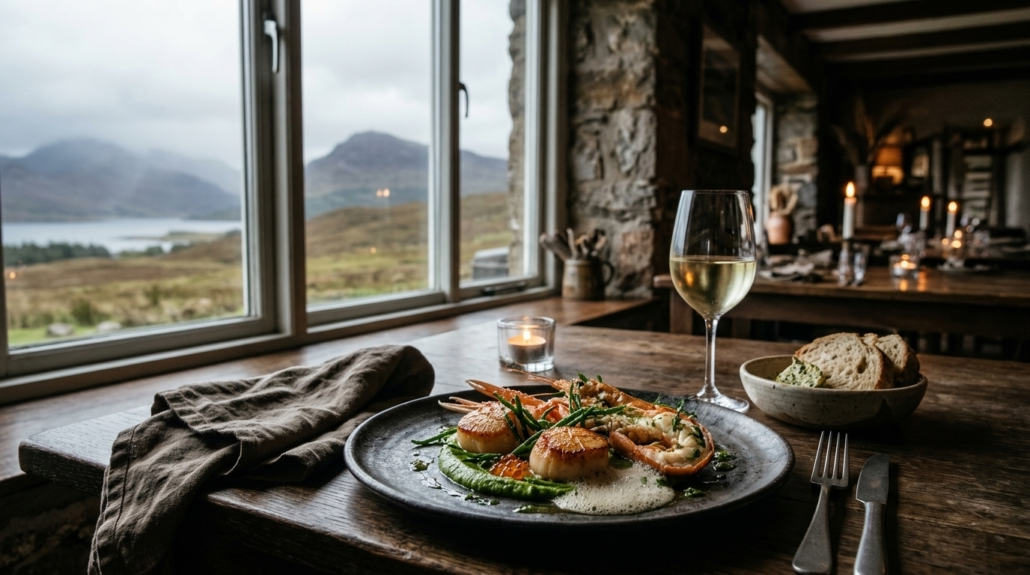
The western seaboard of Scotland is defined by an intricate web of sea lochs, rugged peninsulas, and cold, deep Atlantic currents. For travellers exploring the dramatic landscapes around Kintail, Inverinate, and Wester Ross, this coastal geography offers more than just sweeping vistas. It creates an exceptional marine environment that yields some of the finest seafood in the world. Understanding where this food comes from, how it is harvested, and where to experience it adds a rich, sensory dimension to any journey through the Scottish Highlands.
The Marine Environment of Wester Ross
The cold, crystal-clear waters off the west coast of Scotland maintain unique conditions that allow marine life to thrive. Sea lochs such as Loch Duich, Loch Long, and Loch Alsh act as sheltered nurseries where tides cycle nutrient-rich Atlantic water past rocky reefs and deep sandy basins.
Unlike intensive aquaculture environments found elsewhere, the marine ecosystems supporting the Wester Ross coast rely on natural tidal energy and rigorous, small-scale harvesting traditions. Local fishermen work within the rhythms of the sea, targeting species whose quality is directly tied to the purity of the water. For visitors staying in the Kintail area—whether based in a self-catering retreat near Inverinate or exploring the shores of Loch Duich—the proximity to active fishing grounds means that the seafood served locally is often caught just hours before reaching the plate.
Iconic Species of the West Coast Waters
The waters flanking Wester Ross support a diverse array of shellfish and finfish, each shaped by the specific depths and temperatures of the region.
Langoustines and Prawns
Often referred to locally as Nephrops or Dublin Bay prawns, langoustines are arguably the crown jewel of the west coast catch. Dwelling in burrows in the soft mud of sea lochs, they are caught using creels (baited pots) dropped by small local boats. Creel fishing is a low-impact method that protects the seabed and ensures each prawn is brought up alive and pristine. Their sweet, delicate meat requires minimal preparation; simple steaming or quick pan-frying in garlic butter lets the natural flavour of the clean sea shine through.
Wild and Creel-Caught Shellfish
Beyond langoustines, the rocky shores and tidal currents sustain abundant populations of brown crab, velvet crabs, and lobsters. Local divers also harvest hand-dived scallops from the clear sea beds of the inner lochs. Hand-diving is a selective process that eliminates bycatch and avoids disturbing the surrounding marine habitat, yielding large, sweet scallops that are frequently served simply seared with a squeeze of fresh lemon. Mussels and oysters, farmed in the nutrient-rich sea lochs, filter the pristine water to develop a deeply briny, clean taste of the Atlantic.
Whitefish and Pelagic Catch
Traditional demersal species such as cod, haddock, and pollack inhabit the deeper offshore rocky reefs, while pelagic species like mackerel and herring move into the lochs in shimmering shoals during the warmer months. Historically vital to the coastal economy of the Highlands, these fish remain staples of local menus, appearing freshly landed, filleted, and lightly pan-fried or smoked over local hardwood chips.
Experiencing Local Seafood: The Applecross Peninsula Connection
For travellers based near Kintail, a journey across the legendary Applecross peninsula offers one of the most celebrated coastal dining experiences in the region. The route itself—climbing over the dramatic mountain pass of Bealach na Bà—prepares visitors for the remote, maritime character of the west coast.
Nestled on the shore overlooking the Inner Sound towards Raasay and Skye, the historic Applecross Inn has earned an enduring reputation for championing local waters. The daily chalkboard menu reflects the realities of the local weather and sea conditions, featuring whole Applecross Bay prawns, locally dressed crab salad, smoked salmon, and freshly landed whitefish. Eating here, mere yards from the water where the catch was sourced, grounds the visitor in the culinary heritage of Wester Ross.
Closer to the immediate Kintail and Lochalsh area, smaller community hubs, local smokehouses, and seasonal seafood shacks offer similar opportunities to taste the harvest of the local tides. Enjoying a box of fresh, locally boiled langoustines while watching the light shift over the shifting surface of Loch Duich offers a quintessential Highland moment.
Sustainable Practices and the Future of Coastal Catch
As interest in slow travel and food provenance grows, visitors increasingly look for transparency in how their food is sourced. The west coast fishing community balances centuries-old traditions with modern sustainability frameworks. Small-scale creelers and hand-divers play a crucial role in maintaining balanced fish stocks, ensuring that the marine ecosystem of Wester Ross remains resilient for generations to come.
By choosing establishments that prioritize local, day-boat landings, travellers directly support the fragile rural economies of the western seaboard. This connection between landscape, community, and plate transforms a simple meal into an authentic exploration of place.
To learn more about the landscape, surrounding culture, and an ideal accommodation base for your journey through this remarkable region, explore further at Luxury Cottages Scotland.