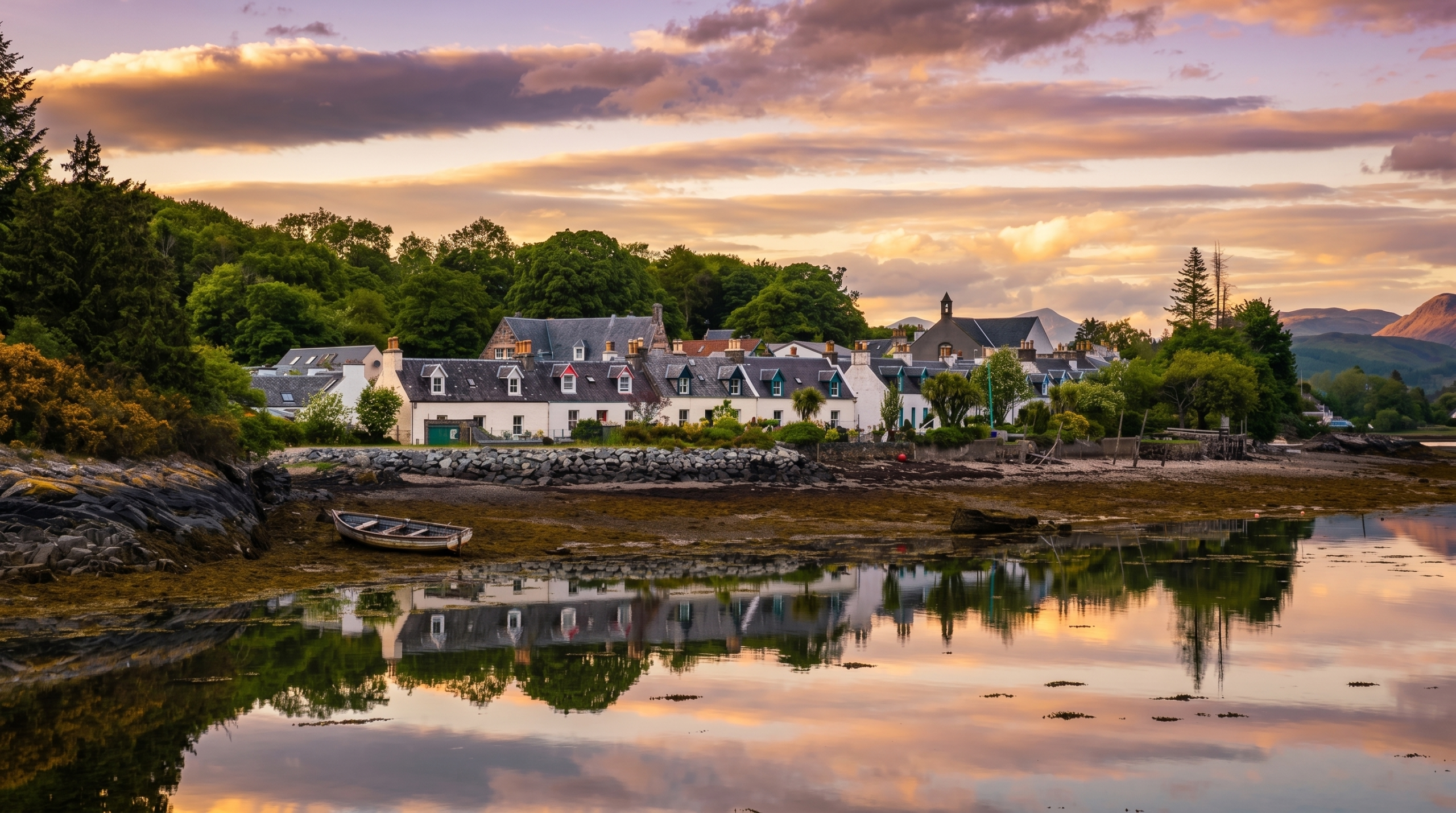
Discover the tranquil charm of Inverinate, a hidden gem nestled along the shores of Loch Duich. As the closest village to Innis a Chro Luxury Cottages, Inverinate offers a perfect blend of Highland heritage and natural splendor. Guests staying in our luxury self-catering accommodation can enjoy the peaceful atmosphere of this traditional crofting community while remaining perfectly positioned to explore the surrounding peaks of the Kintail mountains.

From the historic Inverinate Church to the stunning viewpoints overlooking the loch, this area provides a serene backdrop for your Scottish Highlands escape. Whether you are stocking up on local essentials or simply taking a slow morning stroll to admire the reflections on the water, Inverinate represents the quiet soul of the North West Highlands. Use our luxury lodges as your base in Inverinate to experience authentic mountain living combined with modern, high-end comfort.

The Western Highlands of Scotland represent one of the last great wildernesses in Europe. Here, the landscape is defined by the dramatic intersection of the Kintail mountains—the legendary Five Sisters—and the deep, saltwater lochs that carve into the Atlantic coast. For the traveller seeking a “slow travel” experience, this region offers more than just scenery; it provides a rare opportunity to observe some of Britain’s most elusive species in their natural habitats.

Understanding the rhythms of the Highland landscape is essential for any wildlife enthusiast. Success in spotting golden eagles, red deer, or pine martens requires patience, local knowledge, and a strategic base that allows for immediate access to both mountain ridges and coastal shorelines.

Roe deer

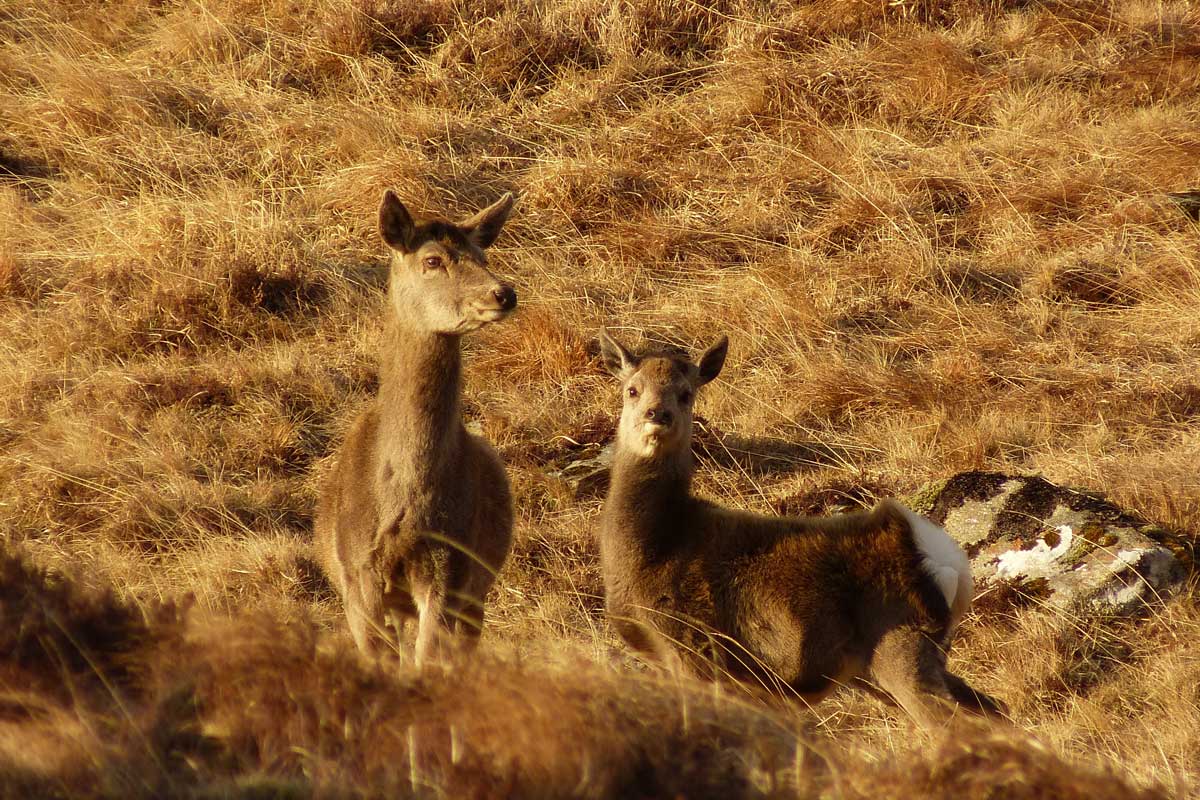
A Red Deer photographed near Innis a Chro

The Vertical Wilderness: Wildlife of the Kintail Peaks

The mountains surrounding Innis-a-Chro are not merely a backdrop; they are a functioning ecosystem. Kintail is home to some of the most iconic upland species in the UK, often found in the quiet corries and steep scree slopes away from the main hiking arterial routes.

Majestic Birds of Prey

The Golden Eagle is the undisputed monarch of the Kintail skies. These raptors require vast territories, and the rugged terrain of the Glenshiel hills provides the perfect thermal currents for soaring. To see them, one must look toward the higher ridges on clear, still mornings. Unlike the more common buzzard, which has a distinctively fanned tail, the golden eagle is larger, with longer wings and a more powerful, purposeful flight pattern.

Red Deer: The Sentinels of the Glen

Red deer are synonymous with the Scottish Highlands. While they are often seen on the lower slopes during the winter months to escape the harshest weather, they retreat to the higher plateaus during the summer. The “rut” in autumn is a particularly evocative time in Kintail, as the roar of the stags echoes across the glens. Observing these animals requires a quiet approach and an awareness of wind direction, as their sense of smell is remarkably acute.


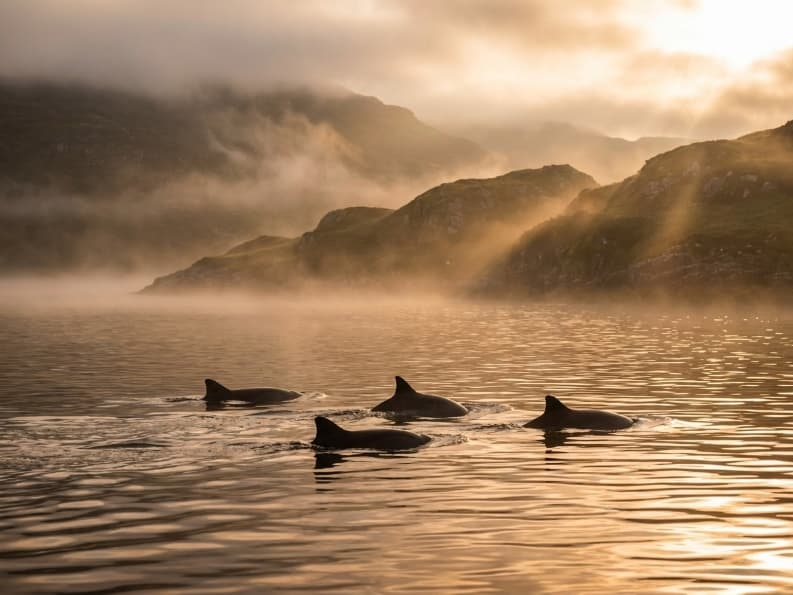
View harbour porpoises in Scotland

View harbour porpoises in Scotland

Where the Mountains Meet the Sea: The Atlantic Coastline

The proximity of the Kintail mountains to the sea creates a unique “edge” habitat. Loch Duich and the neighbouring Loch Alsh are part of a complex system of sea lochs that are rich in nutrients, supported by the North Atlantic Drift.

The Elusive European Otter

The Western Highlands are one of the best places in Europe to observe the Eurasian otter. Unlike their freshwater counterparts in the south, Highland otters are largely “maritime,” foraging in the kelp forests of the sea lochs.

Success in spotting an otter depends largely on the tide. They are most active during a rising or falling tide when the receding water reveals prey hidden in the seaweed. Look for the “V” shape in the water as they swim, or listen for the distinctive whistling call of a mother to her cubs. The rocky outcrops along the shores of Loch Duich offer excellent vantage points for quiet observation.

Marine Giants and Coastal Visitors

The Atlantic coast is a corridor for marine megafauna. From the shores nearby, particularly as one moves toward the Kyle of Lochalsh and the Skye bridge, it is possible to see:

  • Harbour Porpoises: Often seen surfacing briefly in the calmer waters of the lochs.

  • Common and Grey Seals: Frequently found hauled out on the skerries (rocky islets) at low tide.

  • Basking Sharks: During the warmer summer months, these gentle giants can sometimes be seen from the shore as they filter-feed on plankton.


The Secretive Inhabitants of the Highland Woodlands

The remnants of the ancient Caledonian pine forest and the lush hazel and birch woods of the west coast provide cover for some of Scotland’s rarest mammals.

The Return of the Pine Marten

Once nearly extinct in the UK, the pine marten has made a significant recovery in the Western Highlands. These cat-sized members of the weasel family are arboreal and notoriously shy. They are most active at dawn and dusk. In areas like Kintail, where human density is low and the woodland is maturing, they are increasingly common. Observing them requires staying in a quiet, secluded location where the transition between garden and forest is seamless.

Red Squirrels

While the invasive grey squirrel has dominated much of the UK, the Western Highlands remains a stronghold for the native red squirrel. These agile climbers are a joy to watch as they forage for nuts and seeds. The mixed woodlands around the base of the Five Sisters of Kintail provide an ideal habitat for them.


Seasonal Rhythms: When to Visit for Wildlife

Wildlife photography and observation in the Highlands are heavily dictated by the seasons and the shifting quality of light.

Spring and Early Summer

This is the peak season for birdlife. The hills are alive with the calls of Meadow Pippits and Wheatears, while the sea cliffs further along the coast begin to bustle with nesting seabirds. It is also the best time to see newborn deer calves hidden in the long grass.

Autumn

The landscape turns to a palette of burnt orange and deep purple. The deer rut is the headline event, but this is also an excellent time for fungi foraging and observing the salmon run in the local rivers as they return to their spawning grounds.

Winter

The Highlands in winter are stark and beautiful. While some species hibernate or migrate, others, like the mountain hare and the ptarmigan, change their coats to white to blend with the snow. The lower light levels and shorter days often bring larger animals down from the high peaks closer to the glens, making them easier to spot from the comfort of a valley-floor base.


The Importance of a Quiet Base: Staying in Kintail

To truly experience the wildlife of the Western Highlands, one must move away from the high-traffic tourist hubs. Staying within the Kintail estate or the immediate surrounding glens allows for a deeper immersion in the environment.

A base like Innis-a-Chro provides a unique advantage. Situated at the head of the glen, it sits within the natural corridors used by animals moving between the high ground and the water. It is not uncommon to see deer grazing just beyond the window or to hear the call of an owl as night falls over the mountains. This proximity allows for “stationary wildlife watching”—the practice of letting the wildlife come to you by simply being present and still in a wild place.

Practical Tips for the Wildlife Photographer

  1. Optical Equipment: A good pair of 8×42 binoculars is essential. For photographers, a lens with at least 400mm focal length is recommended to capture images without disturbing the animals.

  2. Clothing: The weather in the Highlands is famously unpredictable. Muted colours (greens, browns, and greys) are vital for blending into the landscape.

  3. Respect the Environment: Always follow the Scottish Outdoor Access Code. Maintain a respectful distance from all wildlife, particularly during breeding and nesting seasons.

Exploring Further: Day Trips from Kintail

While Kintail itself is a biodiversity hotspot, its position makes it an ideal launchpad for exploring the wider Atlantic coast:

  • The Bealach na Bà and Applecross: A journey over the UK’s highest road leads to a coastline famous for its rugged beauty and frequent sightings of red deer and coastal birds.

  • The Isle of Skye: Just a short drive away, the “Winged Isle” offers opportunities to see White-tailed Sea Eagles, which have a massive wing span and are often seen patrolling the cliffs.

  • Eilean Donan and Loch Alsh: The nearby castle is not just a historical site; the surrounding waters are a prime location for spotting otters and herons.


Conclusion: The Art of Slow Discovery

The Western Highlands do not give up their secrets easily. The beauty of this region lies in its subtlety—the flash of a pine marten’s tail, the distant silhouette of an eagle, or the quiet ripple of an otter in the loch. By choosing a base in the heart of Kintail, you are not just visiting the Highlands; you are becoming part of the landscape for a time.

Whether you are a professional photographer or simply someone seeking a connection with the natural world, the combination of the mountains and the Atlantic coast provides a profound sense of peace and a reminder of the raw power of nature.


Discover the quiet beauty of the Highlands.

To learn more about the unique landscape of Kintail and to plan your stay in our secluded mountain retreat, explore our guides and accommodation options.

Explore Innis-a-Chro and the Western Highlands

For decades, the only way to reach the Isle of Skye was to follow the lyrics of the famous Skye Boat Song—taking a ferry “over the sea to Skye.” While romantic, it often meant long queues, weather-dependent schedules, and the uncertainty of island logistics.

Today, the Skye Bridge has fundamentally changed the way travellers experience the Inner Hebrides. Spanning the sparkling waters of Loch Alsh, this iconic structure has turned a potentially stressful sea crossing into a seamless, five-minute drive. For those planning a trip to the Scottish Highlands, understanding how to use the bridge effectively is the key to a flexible and relaxed itinerary.


A Seamless Connection: Why the Skye Bridge Matters

Opened in 1995, the Skye Bridge connects the mainland village of Kyle of Lochalsh to Kyleakin on the island. While it was once a tolled crossing—renowned as one of the most expensive in Europe—it has been free to cross since 2004.

The primary advantage of the bridge is freedom. Unlike the Mallaig-to-Armadale ferry, which requires advance booking and strict arrival times, the bridge allows you to come and go as you please. Whether you want to catch a 4:00 AM sunrise at the Old Man of Storr or return to the mainland late after a seafood dinner in Portree, the bridge is always open.

The Route to the Island

Most travellers reach the bridge via the A87, a road often cited as the most scenic drive in Scotland. As you head west through Glen Shiel, the mountains of Kintail rise like giant sentinels on either side. It is a dramatic prelude to the island itself.

  • From Inverness: Approximately 1 hour 30 minutes.

  • From Fort William: Approximately 1 hour 45 minutes.

  • From Kintail: A mere 15–20 minute drive.


Photography and Viewpoints: The Bridge as a Landmark

The Skye Bridge is not just a functional road; it is a feat of engineering that offers some of the best views in the North West Highlands. The main arch rises 35 metres above the water, providing a stunning vantage point over the Inner Sound and the Applecross peninsula.

Where to Stop for the Perfect Shot

If you want to capture the bridge itself, there are several key spots to pull over:

  1. Kyle of Lochalsh: Head to the harbour area for a perspective that shows the bridge sweeping across the water toward the lighthouse on Eilean Bàn.

  2. Eilean Bàn (White Island): The bridge actually rests on this tiny island mid-crossing. Eilean Bàn was once the home of author Gavin Maxwell (famed for Ring of Bright Water) and now serves as a peaceful wildlife sanctuary.

  3. Kyleakin Pier: Once you’ve crossed onto Skye, look back from the pier in Kyleakin. You’ll see the ruins of Castle Moil in the foreground with the modern curves of the bridge behind it—a perfect contrast of Scotland’s ancient and modern history.


Strategic Bases: Exploring Skye Without the Crowds

While the Isle of Skye is undeniably beautiful, its popularity means that the main hubs—like Portree—can become very busy during the peak season. A growing trend among slow-travel enthusiasts is to stay just off the island on the mainland side.

By choosing a base in the Kintail or Lochalsh area, you gain the best of both worlds. You are within a 20-minute drive of the bridge, allowing for easy day trips to Skye’s “big hitters” like the Quiraing or Dunvegan Castle, but you can retreat to the quiet, untouched wilderness of the mainland in the evening.

Staying locally in Strath Croe or near Eilean Donan Castle means you can monitor the weather. If the Cuillin mountains are shrouded in mist, you can swap your island day for a hike up the Five Sisters of Kintail or a walk to the Falls of Glomach without losing hours to travel.


Practical Tips for Crossing the Skye Bridge

To ensure your journey is as smooth as possible, keep these practicalities in mind:

  • Fuel Up: While there are petrol stations on Skye (Broadford and Portree), they can be busy. It is often easier to fuel up in Kyle of Lochalsh before you cross.

  • Check the Wind: In extreme gale-force winds, the bridge may occasionally close to high-sided vehicles or, very rarely, all traffic. Always check the local weather or Traffic Scotland updates during winter storms.

  • Pedestrians and Cyclists: The bridge has a dedicated pedestrian walkway. Walking across is highly recommended if you have the time—the views of the Raasay and Scalpay islands from the highest point are breathtaking.

  • The “Alternative” Route: If you want a more traditional experience, the tiny Glenelg-Kylerhea ferry still operates during the summer months. It is the last manually operated turntable ferry in the world and offers a charming, slow-paced alternative to the bridge.


Making the Most of Your Highland Adventure

The Skye Bridge has effectively turned the Isle of Skye into an extension of the mainland, but it hasn’t stripped the island of its “away from it all” atmosphere. It simply makes that atmosphere more accessible to those who value their time.

By removing the barriers of ferry timetables and tolls, the bridge invites you to explore at your own pace. You can spend your morning wandering the Fairy Pools and your afternoon exploring the historic glens of Kintail, all while enjoying the comfort of a single, central base.

If you are looking for a tranquil sanctuary that offers the perfect balance of mainland mountain views and easy access to the island, consider exploring the area further. A stay nestled in the heart of the mountains provides the ultimate starting point for your North West Highland odyssey.

To discover a luxurious base just a short drive from the gateway to Skye, visit Innis-a-Chro Luxury Cottages.