
Ultimate Guide to Exploring Kintail and the Northwest Scottish Highlands

The Northwest Highlands of Scotland represent one of the last remaining truly wild landscapes in Europe. For travellers planning a journey to this region, the sheer scale of the landscape can feel overwhelming. Planning a trip here requires an understanding of geography, unpredictable weather systems, and the logistics of navigating single-track roads.
This guide provides an authentic, practical framework for exploring Kintail and the wider Northwest Highlands.
Whether you are a landscape photographer chasing the perfect light, a hillwalker aiming to summit classic peaks, or a slow-travel enthusiast looking to disconnect, understanding the nuances of this terrain ensures a safe and rewarding journey.
Why Kintail is the Perfect Base for a Highlands Itinerary
When researching where to stay in the Scottish Highlands, geographic positioning is everything. Many visitors make the mistake of moving accommodations every night, spending more time unpacking and driving than experiencing the landscape. Choosing a central base in the western Highlands allows for deep exploration without the exhaustion of constant travel.
Kintail sits at a strategic crossroads. Located just off the main A87 route, it provides immediate access to the Isle of Skye, the remote wilderness of Wester Ross, and the deep glens of Lochaber.
Staying in this area allows you to react to the shifting Scottish weather. If the mist hangs low on the mountains of Skye, you can easily pivot east toward the sheltered glens of Inverness-shire or south toward the historic Great Glen. It offers the rare combination of deep wilderness isolation and excellent logistical connectivity.
Navigating the Wild Landscapes of Kintail
The landscape of Kintail is defined by dramatic elevation changes, deep sea lochs, and ancient geological formations. Understanding the layout of the land helps you plan day trips that maximise your time outdoors.
The Five Sisters of Kintail
This iconic ridge dominant the skyline along Glen Shiel. Comprising five distinct Munro summits (mountains over 3,000 feet or 914 metres), the ridge is a classic challenge for experienced hillwalkers. The full traverse requires excellent physical fitness, navigation skills, and around eight to ten hours of sustained effort. The rewards are panoramic views that stretch across to the Cuillin of Skye and the remote peaks of Knoydart.
Glen Affric and the Mountain Passes
To the east of Kintail lies Glen Affric, frequently described as Scotland’s most beautiful glen due to its ancient Caledonian pine woods. For those interested in long-distance trekking, historic drove roads and mountain passes connect Kintail directly to Glen Affric. These routes offer low-level alternatives to the high ridges, winding through quiet valleys where red deer and golden eagles are frequently sighted.
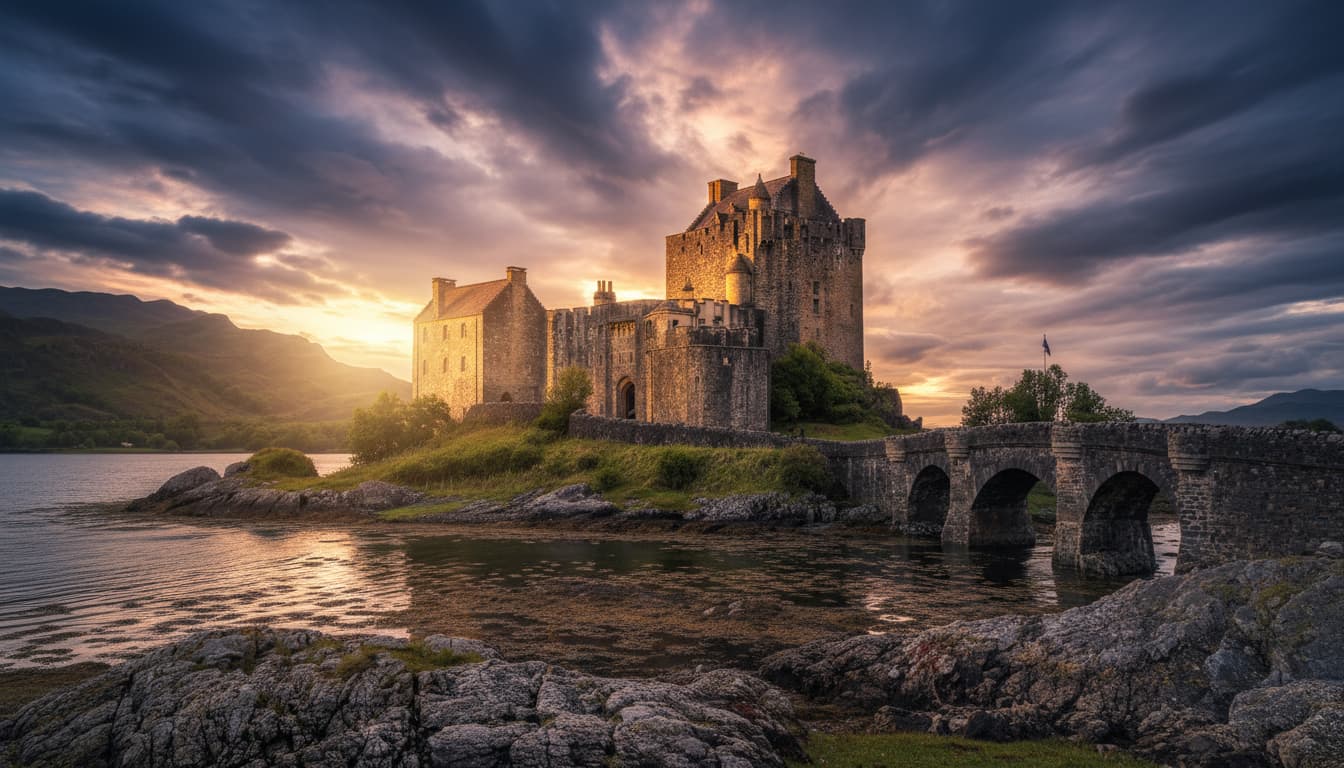
Eilean Donan and Loch Duich
Where the mountains meet the sea, Loch Duich opens up into a dramatic tidal basin. The iconic Eilean Donan Castle sits at the intersection of three sea lochs. While popular with international tourists, viewing the castle at dawn or dusk from the surrounding shoreline offers a much quieter, more atmospheric experience for photographers.
Essential Travel Planning for the Scottish Highlands
A successful trip to the Northwest Highlands relies on preparation. The remote nature of the region means services are spaced further apart than in the southern parts of the UK.
Driving on Single-Track Roads
Many of the secondary routes leading into the most scenic parts of the Highlands are single-track roads with passing places. Navigating these safely requires strict adherence to local etiquette:
-
Always pull into the passing place on your left to let oncoming traffic through.
-
If the passing place is on your right, pause opposite it to allow the other vehicle to maneuver around you.
-
Monitor your rear-view mirror regularly. If a local resident or a faster vehicle is behind you, pull into the next passing place to let them pass.
-
Do not park in passing places; they must remain clear to keep traffic moving.
Preparing for Mountain Weather
The weather in western Scotland can change from bright sunshine to torrential rain within thirty minutes. This variability is driven by the Atlantic weather systems striking the high mountain barriers.
Always check the Mountain Weather Information Service (MWIS) before heading out. Even during summer, temperatures on the summits can hover near freezing, and high winds can make ridge walking hazardous. Waterproof jacket and trousers, sturdy boots, a map, and a compass are non-negotiable essentials for any mountain excursion.
Photography Guide: Capturing the Northwest Highlands Light
For photographers, the Northwest Highlands offer some of the most compelling conditions in the world. The combination of coastal moisture, dramatic topography, and rapidly shifting clouds creates unique lighting conditions.
Chasing the Golden Hour
Because of Scotland’s northern latitude, the golden hour during the summer months stretches much longer than it does closer to the equator. Conversely, mid-winter days are short, but the sun hangs low on the horizon all day, providing hours of soft, directional light. Glen Shiel and the shores of Loch Duich offer excellent compositions where water reflections mirror the dramatic mountain silhouettes.
Dealing with Flat Light and Rain
Do not pack your camera away when the rain starts. Overcast skies eliminate harsh shadows, making it the perfect time to photograph the ancient woodlands of Glen Affric or the rushing waterfalls of the Pacific-like rain forests of the west coast. Using a circular polarising filter can help remove glare from wet rocks and leaves, saturated the rich greens and deep browns of the landscape.
The Slow Travel Philosophy: Embracing the Highland Pace
To truly appreciate the remote western Highlands, one must adopt a slow-travel mindset. Rushing from one tourist hotspot to another misses the core appeal of the region: its silence, stillness, and immense scale.
Walking Without a Summit Goal
While ticking off Munros is a popular pastime, some of the finest experiences are found in the lower glens. Walking along the old military roads or following a river up into a corrie allows you to notice the finer details of the landscape. Look out for bog cotton blowing in the breeze, sundew plants growing in the peat bogs, and the distinct scent of wet heather and bog myrtle.
Wildlife Watching with Respect
The West Highlands are home to exceptional wildlife, including red deer, pine martens, otters, and golden eagles. Spotting these animals requires patience and silence.
When observing red deer on the lower hillsides, maintain a respectful distance, particularly during the autumn rutting season when stags can be unpredictable. If you are exploring the coastline, scanning the seaweed beds at low tide offers the best chance of spotting a foraging sea otter.
Choosing Your Base: Self-Catering in Kintail
After a demanding day of hiking or photographing in changeable weather, returning to a comfortable, private space is essential. Self-catering cottages provide the flexibility that hotels cannot match, allowing you to cook your own meals on your own schedule, dry out damp gear, and relax without disruptions.
Opting for accommodation in a quiet glen or along the shores of a sea loch anchors you into the local environment. It gives you the space to slow down, watch the changing light on the hillsides from your window, and plan the next day’s adventures based on the morning mist.
Planning Your Highland Route
If you are designing an itinerary, consider breaking your days into distinct geographical directions from your Kintail base:
Day 1: The Glens and Ridges of Kintail
Spend your first full day understanding your immediate surroundings. Take a low-level walk through Glen Lichd or tackle one of the shorter ridges like Am Bathach. End the day by exploring the shoreline around Letterfearn for classic views across Loch Duich.
Day 2: The Wester Ross Coastal Route
Drive north toward Strathcarron and enter the wild landscapes of Wester Ross. The road winds through spectacular coastal terrain, offering views across to the Isle of Raasay and Applecross. This area is famous for its Torridonian sandstone mountains, which rise steeply from sea level.
Day 3: The Isle of Skye
Because Kintail is situated near the Skye Bridge, a day trip to the island is straightforward. Focus on the Sleat Peninsula or the Cuillin hills to minimise driving time, leaving early in the morning to beat the peak visitor traffic at major landmarks.
Conclusion: The Lasting Appeal of the Wild West
The Northwest Highlands leave a permanent impression on those who take the time to explore them properly. By choosing a central, sustainable base, preparing for the realities of the terrain, and slowing down your travel itinerary, you will experience the authentic spirit of Scotland. The mountains of Kintail do not demand a rushed visit; they require time, respect, and an eagerness to discover what lies beyond the next ridge.
If you are beginning to plan your journey to the western Highlands and want a quiet, beautifully positioned base to return to each evening, explore the options available for your stay.
Learn more about the region and discover the ideal base for your next Highland journey at https://www.luxury-cottages-scotland.co.uk