
Exploring the Highlands: A Guide to Authentic Scottish Flavours
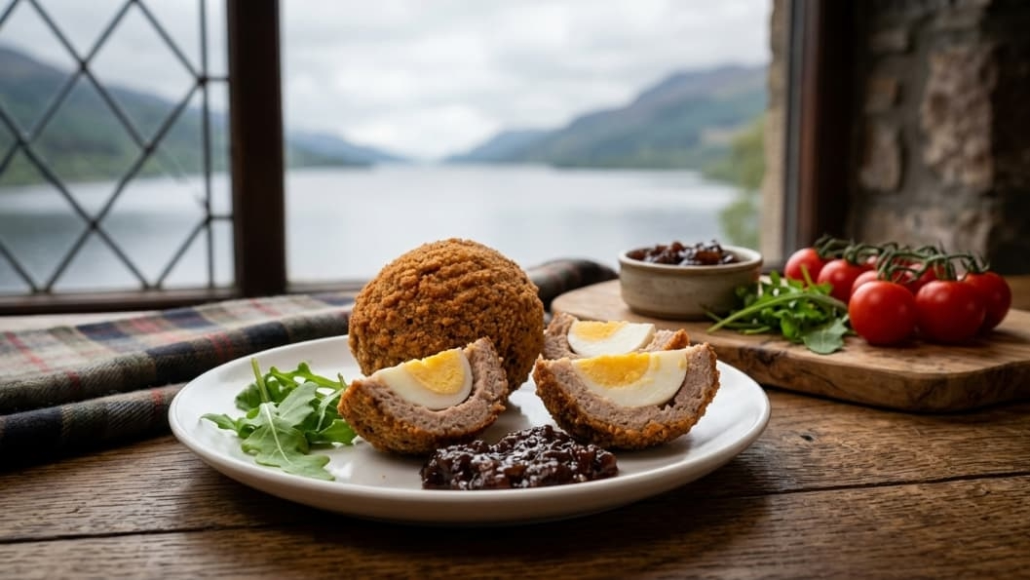
The Scottish Highlands are often defined by their dramatic scales—the height of the Munro’s, the depth of the sea lochs, and the vastness of the mist-covered glens. Yet, for those practising slow travel, the true character of this landscape is often found in its smaller details, specifically its culinary heritage.
Understanding the food of the Highlands is a gateway to understanding the culture and history of the region.
Traditional Scottish cuisine is born of necessity and the land; it is a story of preservation, seasonal abundance, and the resourceful use of what the Atlantic and the heather-clad hills provide.
Whether you are navigating the North Coast 500 or finding a quiet base in Kintail to photograph the Five Sisters, these flavours offer a sensory connection to the environment.
What defines traditional Scottish food?
Scottish delicacies are rooted in high-quality raw ingredients. Because of the rugged terrain and the temperamental climate, the historical focus has been on hardy grains like oats, root vegetables, and protein sourced from the surrounding waters and hills.
Today, this tradition has evolved into a sophisticated larder that prioritises provenance and minimal interference.
1. Haggis: The National Dish
While often shrouded in mystery for international visitors, haggis is a masterclass in savoury seasoning. It is a traditional “pudding” made from sheep’s pluck (heart, liver, and lungs) minced with onion, oatmeal, suet, and a heavy hand of black pepper and spices.
-
The Texture: Crumbly and moist, similar to a coarse pâté.
-
The Serving: Traditionally served with “neeps and tatties” (mashed turnips and potatoes). In modern Highland bistros, you may find it as a “haggis bon-bon” served with a whisky cream sauce.
2. Cullen Skink
If there is one dish that captures the essence of the Scottish coastline, it is Cullen Skink. Originating from the town of Cullen in Moray, this is a thick, creamy soup that relies on three primary ingredients: smoked haddock, potatoes, and onions.
For a photographer or hiker returning from a day in the damp Highland air, Cullen Skink provides a level of warmth and saltiness that thinner soups cannot match. It is a hearty meal in its own right, usually served with crusty bread and salted butter.
3. Hand-Dived Scallops
The waters around the West Coast and the Isle of Skye are world-renowned for their shellfish. Hand-dived scallops are a sustainable delicacy, collected individually by divers to ensure the seabed remains undamaged.
The cold, clean waters of the Atlantic result in scallops that are exceptionally sweet and firm. In local eateries near Kintail and Loch Alsh, these are often seared briefly and served with Stornoway black pudding—a pairing of land and sea that is foundational to modern Scottish dining.
4. Stornoway Black Pudding
Protected by Geographical Indication (GI) status, true Stornoway Black Pudding comes from the Isle of Lewis. Unlike other varieties, it is made with beef suet and a high proportion of oatmeal, giving it a unique, rugged texture. It is deeply savoury and less metallic than its continental counterparts, making it a staple of the “Full Scottish” breakfast.
5. Arbroath Smokies
An Arbroath Smokie is a whole haddock that has been salted and smoked over hardwood fires (usually oak) in a very specific, traditional manner. The fish is tied in pairs and hung over a barrel. The result is a rich, copper-coloured skin and flaky, creamy white flesh with a subtle, smoky aroma. While they originate on the East Coast, they are a frequent feature on breakfast menus across the Highlands, often flaked into scrambled eggs.
The Sweeter Side of the Highlands
Scottish desserts and baked goods reflect a love for simple fats, natural sugars, and, occasionally, a generous pour of the national spirit.
6. Cranachan
Cranachan is often described as “the king of Scottish desserts.” It was originally a celebration of the raspberry harvest. It consists of whipped cream, honey, fresh Scottish raspberries, and toasted oatmeal that has been soaked overnight in malt whisky.
It is a balanced dish—the acidity of the berries cuts through the richness of the cream, while the toasted oats provide a necessary crunch. It is the quintessential Highland summer dessert.
7. Clootie Dumpling
A “clootie” is a traditional steamed pudding, named after the cloth (or “cloot”) in which it is boiled. It is a dense, spiced fruit cake made with dried sultanas, currants, suet, and treacle. Once boiled, the pudding is often dried in the oven to create a “skin” on the outside. It is a heavy, comforting dish typically served with custard or a dollop of fresh cream during the colder winter months.
8. Shortbread
Real Scottish shortbread is a lesson in minimalism. It requires only three ingredients: flour, sugar, and a high volume of high-quality butter. The texture should be “short”—meaning it crumbles easily upon the first bite. In the Highlands, you will find variations seasoned with local lavender or sea salt, but the traditional plain “finger” or “round” remains the standard.
Essential Scottish Staples
9. Oatcakes
Before the widespread availability of wheat, oats were the primary grain of Scotland. Oatcakes are flat, savoury crackers that have been a staple of the Scottish diet for centuries. They are the perfect vessel for local cheeses, such as a sharp Isle of Mull Cheddar or a creamy Strathdon Blue. For hikers, they remain an excellent, slow-release energy snack.
10. Scotch Pie
A Scotch Pie is a small, double-crust meat pie, traditionally filled with minced mutton but now more commonly beef. The crust is “hot water pastry,” which makes it sturdy enough to be eaten by hand. It is a common sight at local Highland Games and football matches—a functional, no-nonsense piece of culinary history.
Planning Your Culinary Journey in the Highlands
When researching a trip to the Scottish Highlands, it is easy to focus solely on the landmarks like Eilean Donan Castle or the peaks of Glencoe.
However, aligning your travel with the seasons can significantly enhance the food you experience.
Seasonal Considerations
-
Spring: Look for wild garlic in the woodlands and the beginning of the lamb season.
-
Summer: This is the peak for soft fruits, especially strawberries and raspberries from the glens, and fresh mackerel from the coast.
-
Autumn: The season for game. Venison, sourced from the surrounding hills, is at its best, as are wild chanterelle mushrooms.
-
Winter: Focus on root vegetables, smoked fish, and hearty stews. This is also the best time to enjoy a “wee dram” of whisky by a fire.
Finding Authenticity
To find the best local produce, look for small-scale producers. Many Highland villages have local butchers and fishmongers who supply the nearby inns and restaurants. In the Kintail area, the proximity to the coast means that seafood is often landed just a few miles from where it is served.
Choosing a self-catering base allows for a more immersive experience. Visiting a local market or a smokehouse and returning to a well-equipped kitchen to prepare fresh langoustines or a local venison loin is a highlight for many slow-travel enthusiasts. It provides the freedom to eat at the pace of the landscape, rather than a restaurant’s schedule.
A Note on Whisky
While not a “food” in the traditional sense, whisky is inseparable from the Scottish table. When pairing whisky with food, consider the geography. Peated, smoky whiskies from the islands often pair beautifully with smoked meats or strong blue cheeses. The lighter, floral malts of the Speyside or Highland regions complement desserts like Cranachan or buttery shortbread.
The Landscape and the Larder
The reason these delicacies taste better in the Highlands is the context. There is a psychological connection between seeing the Highland cattle grazing in a glen and later enjoying a slow-cooked beef stew, or watching the fishing boats return to the pier while eating a bowl of Cullen Skink.
For photographers, the “golden hour” in the Highlands provides more than just light; it provides the atmosphere for an evening meal. As the light fades over the lochs of Kintail, the transition from the outdoors to the warmth of a local dwelling is a fundamental part of the Highland experience.
Practical Tips for the Food-Focused Traveller
-
Book Ahead: Even in more remote areas, the best local restaurants fill up quickly, especially during the summer months.
-
Ask About Provenance: Most Highland chefs are proud of their suppliers. Don’t hesitate to ask where the beef or fish was sourced.
-
Try the Local Water: Scottish tap water is some of the softest and purest in the world; it is the foundation of the local spirits and teas.
Conclusion
Exploring the traditional flavours of Scotland is not merely about ticking items off a list; it is about engaging with the history and geography of the Highlands. From the peppery warmth of haggis to the delicate sweetness of a hand-dived scallop, each dish offers a direct link to the land and sea.
As you plan your journey through the glens and over the mountain passes, allow time to linger over these tastes. Whether you are stocking up on local supplies for a quiet week in a mountain glen or stopping at a coastal inn, the food of the Highlands will remain one of your most enduring memories of the North.
For those seeking a quiet, authentic base from which to explore the landscapes and flavours of Kintail and the West Coast, further information on the region and local stays can be found at Innis-a-Chro Luxury Cottages.