
A Complete Guide to Loch Hourn: Exploring Scotland’s Most Fjord-Like Sea Loch
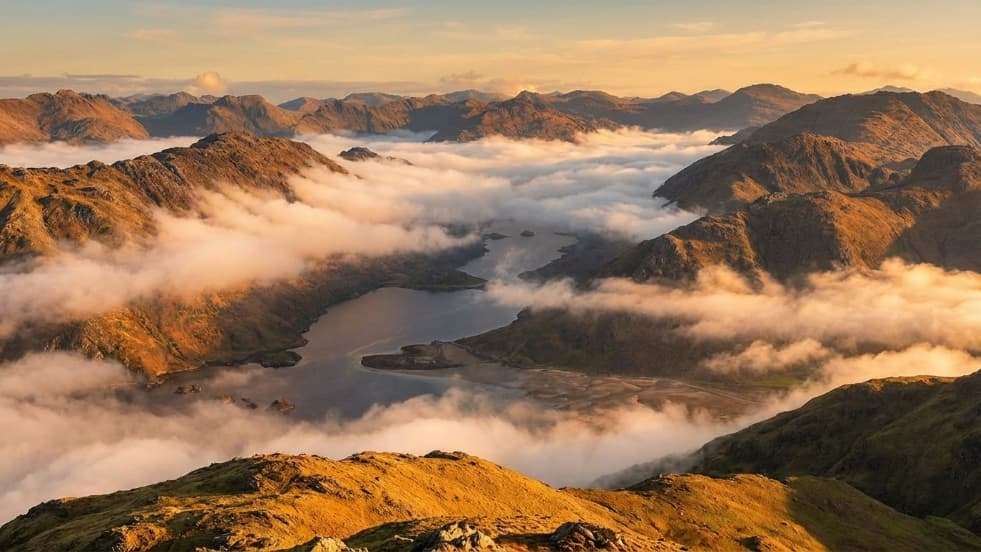
The Scottish Highlands are renowned for their dramatic landscapes, but few places capture the raw, untamed spirit of the west coast quite like Loch Hourn. Hidden away between remote peninsulas and towering mountains, this deep sea loch feels like a world of its own—a place where the modern world falls away, replaced by the rhythm of the tides, the call of seabirds, and the silent watch of red deer.
Interestingly, the Gaelic name, Loch Iutharn (often anglicised as Loch Hourn), translates to “Loch of Hell”. Yet, for those who seek out slow travel, immersive nature, and profound quiet, the experience of visiting is anything but.
Whether you are a photographer chasing the fleeting Highland light, a hiker aiming for the remote peaks of the Knoydart peninsula, or a traveller simply looking to breathe in the salt air of the wilderness, Loch Hourn is a destination that demands to be experienced.
Here is everything you need to know about visiting one of the most spectacular corners of the North West Highlands.
What is Loch Hourn?
Loch Hourn is a 14-mile-long sea loch on the west coast of Scotland, separating the Glenelg peninsula to the north from the remote Knoydart peninsula to the south. Often described as Scotland’s most fjord-like loch, it was carved by ancient glaciers, leaving behind steep, dramatic mountain sides that plunge directly into the dark, tidal waters.
Unlike many of Scotland’s more accessible sea lochs, Loch Hourn has no roads running its full length. The shoreline is mostly wild, dotted with scattered remnants of ancient Caledonian pine forest, temperate rainforest, and only a handful of isolated dwellings. Because the loch is narrow, sheltered, and fed by heavy rainfall, its salinity changes dramatically from the mouth at the Sound of Sleat to its headwaters, creating a uniquely diverse marine ecosystem.
How to Get to Loch Hourn
Part of Loch Hourn’s magic lies in the journey required to reach it. There are two primary ways to access the loch by road, each bringing you to a different shore.
The Road to Kinloch Hourn (The Head of the Loch)
To reach the very eastern tip of the water, you must navigate the road to Kinloch Hourn. Branching off the main A87 road near Loch Garry, this is a 22-mile single-track road that winds its way through deeply remote and uninhabited country.
The drive itself is an adventure. As you travel west, the landscape becomes increasingly rugged, eventually culminating in a steep, twisting descent to a tiny cluster of buildings at the water’s edge. Here, the road simply ends. There is a small parking area (often operating an honesty box system) and a tea room that opens in the warmer months, but little else.
Over the Pass to Arnisdale and Corran (The North Shore)
If you wish to explore the northern shore of Loch Hourn, the journey takes you over the spectacular Mam Ratagan pass. Starting near Kintail, this winding mountain road offers breathtaking views over the Five Sisters of Kintail before dropping down to the village of Glenelg.
From Glenelg, a narrow coastal road leads south, hugging the shoreline until it reaches the small, picturesque settlements of Arnisdale and Corran.
Looking out across the water from here, you are treated to sweeping views of the Knoydart wilderness and the imposing bulk of Ladhar Bheinn, the highest mountain in the area.
Hiking Loch Hourn: Trails into the Wilderness
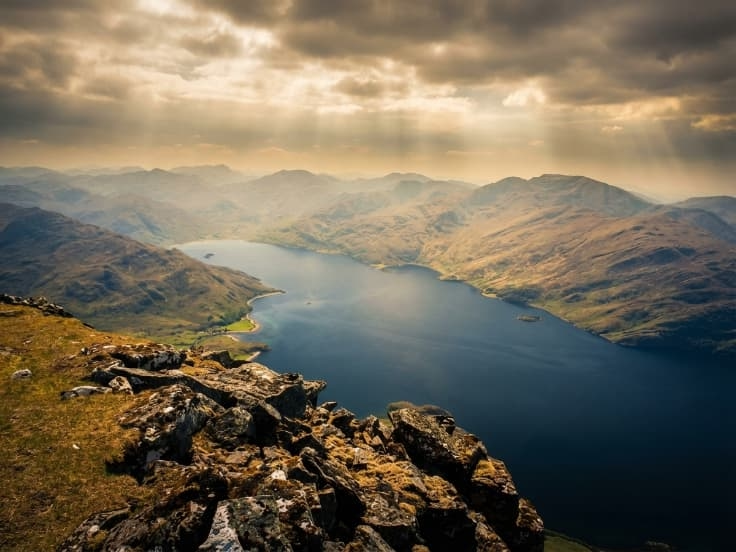
For outdoor enthusiasts, Loch Hourn is a gateway to some of the most challenging and rewarding walking in the UK. The terrain here is rarely flat; it is a landscape of ancient stalkers’ paths, rocky outcrops, and undulating coastal trails.
The Walk to Barrisdale Bay
One of the most celebrated hikes in the area is the walk from Kinloch Hourn to Barrisdale Bay. Forming part of the renowned Cape Wrath Trail, this route follows the southern shore of the loch deep into the Knoydart peninsula.
Do not be fooled by the coastal location—this is not a flat beach stroll. The path climbs and descends repeatedly, picking a line of least resistance across steep hillsides. Along the way, you will pass through rare fragments of native oak and birch woodland. After a few hours of walking, the landscape opens up to reveal Barrisdale Bay, a wide, sandy tidal estuary backed by soaring peaks. It is a stunning, isolated spot, home only to a small estate, a bothy, and a wild camping area.
Bagging the Knoydart Munros
For experienced mountaineers, Loch Hourn provides a dramatic starting point for climbing the Knoydart Munros (Scottish mountains over 3,000 feet). Ladhar Bheinn, with its spectacular sweeping ridges and deep corries, is often accessed via Barrisdale Bay. Reaching its summit offers peerless views across the loch to the Isle of Skye and the Cuillin ridge.
Further inland, the rugged peaks of Luinne Bheinn and Meall Buidhe await those embarking on multi-day treks.
Practical Advice: The weather in this part of the Highlands can change rapidly. The terrain is demanding, and mobile phone reception is virtually non-existent. Walkers should always carry physical maps, a compass, and adequate waterproof gear.
Wildlife in the Highlands: What to Look For
The isolation of Loch Hourn makes it a haven for Scottish wildlife. Because human footfall is relatively low, animals here can often be observed exhibiting natural, undisturbed behaviours.
-
Marine Life: The tidal currents of the loch attract a wealth of marine life. Keep a quiet watch along the rocky shorelines for otters slipping into the kelp. Common and grey seals are frequently spotted basking on the skerries, and if you are fortunate, you may even glimpse the dorsal fin of a porpoise breaking the surface of the water.
-
Birdwatching: The steep crags above the loch are prime territory for golden eagles and white-tailed sea eagles. Lower down, the shoreline is patrolled by herons, oystercatchers, and diving birds such as cormorants and shags.
-
Red Deer: The hills surrounding the loch are heavily populated by red deer. In the colder months, they often come right down to the shoreline to forage, offering wonderful observation opportunities.
Photography at Loch Hourn: Capturing the Light
For landscape photographers, Loch Hourn is a deeply rewarding location. The geography of the loch—narrow and flanked by high mountains—means that light behaves in fascinating ways here.
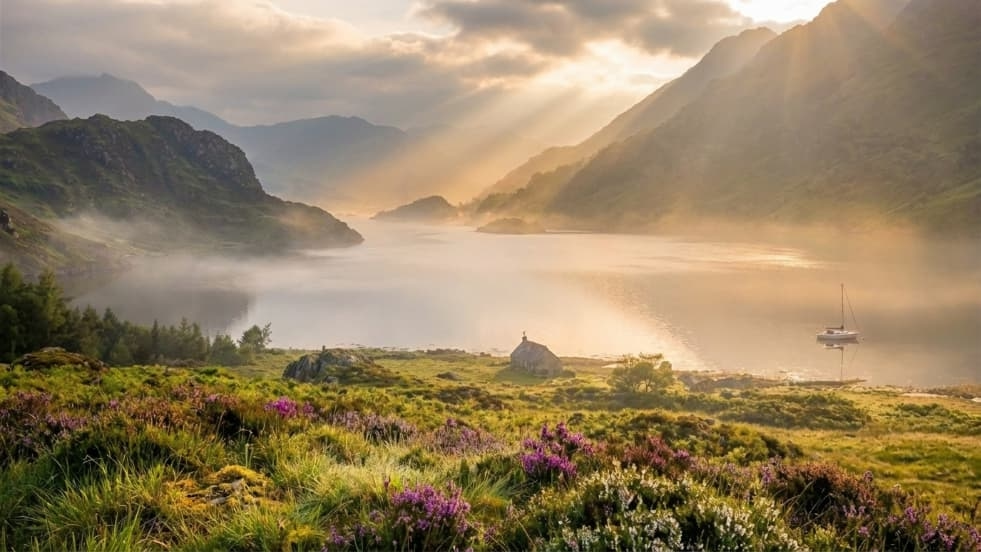
Embrace the Weather: While a clear, blue-sky day is beautiful, Loch Hourn truly comes alive in atmospheric conditions. Low-hanging mist clinging to the ancient pine trees, dramatic storm clouds rolling in from the Sound of Sleat, or the soft, diffused light of a drizzle can yield incredibly moody and authentic Highland images.
Best Locations: The view from the shoreline at Arnisdale looking south towards Knoydart is a classic composition, particularly at sunset when the light hits the peaks of Ladhar Bheinn. Alternatively, the elevated sections of the stalker’s path from Kinloch Hourn offer striking leading lines down the fjord-like basin of the loch.
When to Visit
There is no single “best” time to visit Loch Hourn; every season offers a distinct experience.
-
Spring: Often bringing drier weather and clearer skies, spring is a wonderful time to visit. The hills begin to shed their winter snow, and the bright yellow gorse bursts into bloom along the coastal roads.
-
Autumn: For photographers and hikers, autumn is arguably the prime season. The bracken turns a rich, fiery copper, the midges (Scotland’s infamous biting insects) have largely disappeared, and the rutting season for red deer brings a wild, primeval soundtrack to the glens.
-
Winter: Only for the deeply prepared. The days are incredibly short, and snow and ice can make the single-track access roads impassable. However, the profound silence and snow-capped peaks offer a stark, unmatched beauty for those willing to brave the elements.
Making Your Base in the North West Highlands
Exploring remote locations like Loch Hourn requires energy, preparation, and a comfortable place to recover at the end of the day. Because accommodation directly on the loch is incredibly sparse and often restricted to basic bothies or wild camping, many visitors choose to base themselves a short scenic drive away.
The nearby area of Kintail offers an ideal strategic location.
Situated amongst some of Scotland’s most iconic scenery, Kintail allows you to strike out towards Kinloch Hourn one day, drive over the spectacular Mam Ratagan pass to Arnisdale the next, or simply spend a quiet day exploring the shores of Loch Duich. Our Kintail Guide provides a comprehensive list of all services in the area.
Having a warm, well-equipped base to return to—somewhere to dry your boots, pour a local malt whisky, and watch the evening light shift across the mountains—transforms a rugged Highland expedition into a deeply restorative retreat. It allows you to experience the wild edges of Scotland without sacrificing comfort or peace of mind.
If you are planning a slow-travel journey to the Scottish Highlands and are looking for a tranquil, beautifully appointed base in Kintail to explore Loch Hourn, the Isle of Skye, and beyond, we invite you to discover our accommodation.
Find out more and begin planning your Highland escape at https://www.luxury-cottages-scotland.co.uk.