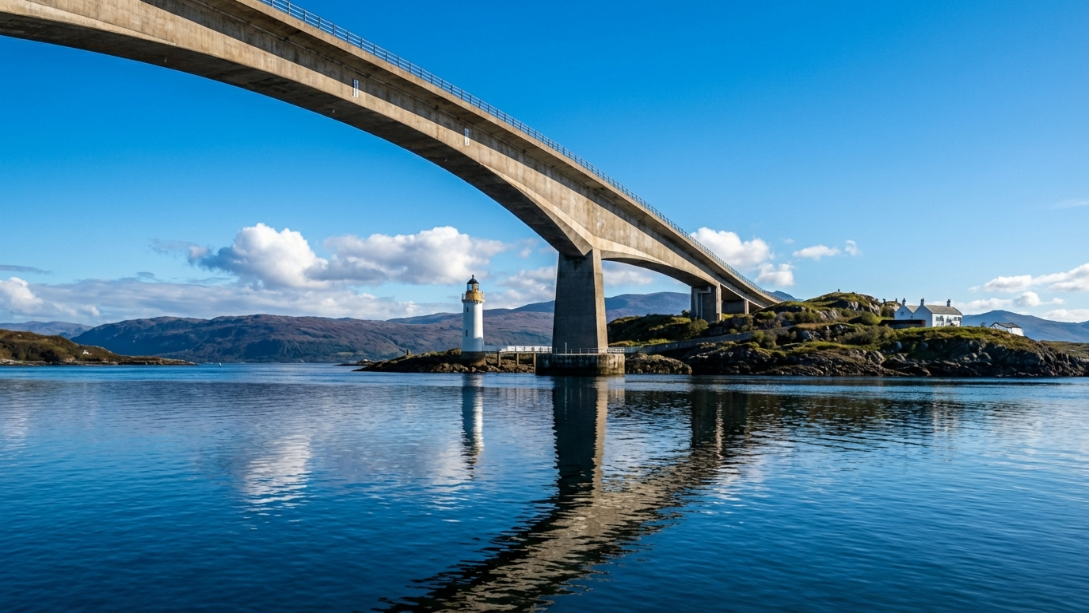
A Guide to Kintail: Discovering the Heart of the Scottish Highlands
For many, the Scottish Highlands are defined by the fleeting glimpse of a glen from a car window or a quick stop at a roadside viewpoint. Yet, for those who prefer the philosophy of slow travel, the true essence of this landscape is only revealed when you stop moving and start observing.
The district of Kintail, located in the northwest Highlands, offers a rare kind of sanctuary. It is a place where the scale of the mountains—most notably the Five Sisters of Kintail—is matched only by the profound silence of the glens. Whether you are a photographer chasing the “blue hour” across a sea loch or a hiker seeking the solitude of a remote Munro, Kintail serves as a masterclass in Highland beauty.
In this guide, we explore how to immerse yourself in this iconic landscape, from the thundering heights of the Falls of Glomach to the quiet history of the Glenelg peninsula.
Why Kintail is the Ultimate Base for Highland Exploration
Kintail is often described as the gateway to the Isle of Skye, but to treat it merely as a thoroughfare is to miss one of Scotland’s most dramatic regions. Managed largely by the National Trust for Scotland, the area is a protected haven of ridges, rivers, and ancient history.
Positioning yourself here allows for a deeper connection to the land. You are within striking distance of the west coast’s most famous landmarks, yet tucked away from the peak-season crowds. It is a landscape that demands time—time to watch the light shift across Loch Duich and time to navigate the winding “Road to the Isles.”
The Geography of Solitude
The region is defined by Glen Shiel, a deep, glaciated valley flanked by steep-sided mountains. To the north lie the Five Sisters; to the south, the equally formidable South Shiel Ridge. For the outdoor enthusiast, this creates a natural playground of high-altitude traverses and low-level riverside rambles.
Essential Experiences: Walking and Hiking in Kintail
Walking in the Highlands is less about “conquering” peaks and more about understanding the terrain. Kintail offers routes for every level of fitness, provided you come prepared for the ever-changing Scottish weather.
1. The Five Sisters of Kintail
This is one of the most celebrated ridge walks in Scotland. Spanning three Munros (mountains over 3,000 feet), the traverse offers panoramic views that stretch toward the Cuillin of Skye and the peaks of Torridon.
-
Searcher’s Tip: This is a strenuous day taking 8–10 hours. For a shorter but equally rewarding view, consider the ascent of Sgùrr an Airgid (the Peak of Silver), which offers a stunning perspective over Loch Duich with significantly less ascent.
2. The Falls of Glomach
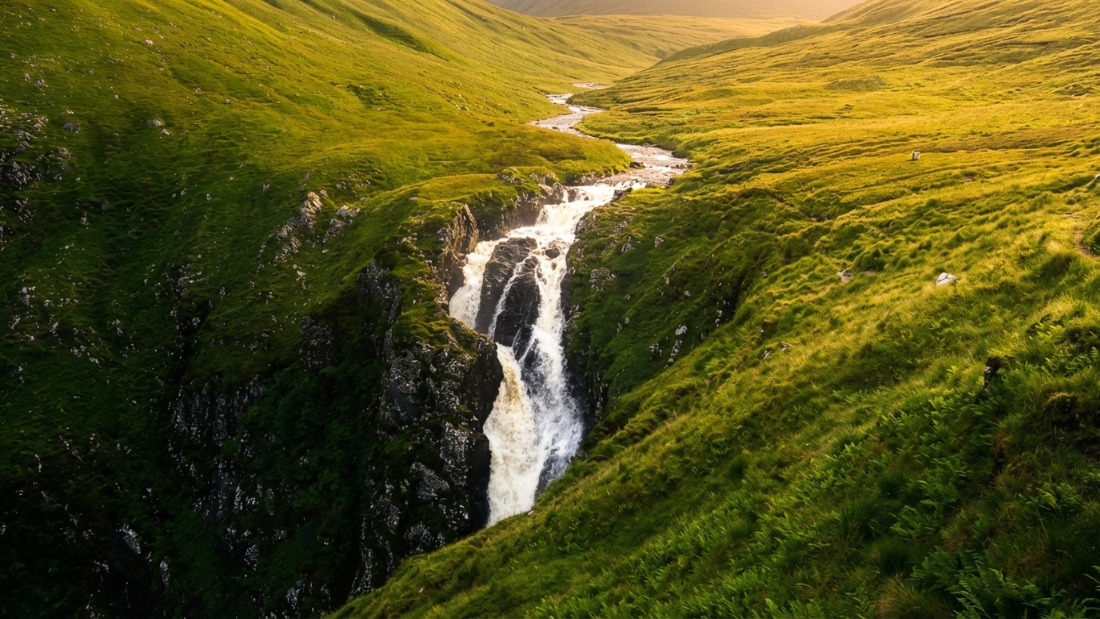
Hidden in a remote fold of the hills, the Falls of Glomach are among the highest and most isolated in Britain. There is no easy way to reach them; the most common route is a 12-mile round trip from Morvich. The reward is a 113-metre drop into a narrow, misty gorge that feels entirely untouched by the modern world.
3. The Affric Kintail Way
For those interested in long-distance trekking, this 44-mile trail links Loch Ness to the west coast. The final stage, which descends through Gleann Lichd, is arguably the most spectacular, as the valley floor opens up to reveal the towering mass of Beinn Fhada.
Capturing the Light: A Photographer’s Perspective
Photographers are drawn to Kintail for its legendary “mood.” Unlike the starker landscapes of the east, the west Highlands are characterised by moisture and Atlantic weather systems, which create incredible atmospheric depth.
The Best Photography Spots in Kintail
-
Eilean Donan Castle: Located just minutes from the heart of Kintail, this 13th-century icon sits at the meeting point of three sea lochs. While popular, it never loses its magic, especially during a high tide at sunset.
-
Loch Cluanie: As you enter Glen Shiel from the east, the shores of Loch Cluanie provide excellent foreground interest, with old tree stumps and reflections of the surrounding peaks.
-
The Mam Ratagan Pass: For a classic “slow travel” detour, take the narrow road over Mam Ratagan toward Glenelg. At the summit, there is a viewpoint that offers perhaps the best vista of the Five Sisters reflected in the waters below.
Note on Light: In the Highlands, the “Golden Hour” can last for several hours in the height of summer, while winter brings a low, raking light that picks out every texture of the heather and rock.
Highland Wildlife and the Changing Seasons
Kintail is a living landscape. Depending on when you visit, the flora and fauna provide a completely different narrative.
Wildlife Spotting
-
Red Deer: These are the true monarchs of the glen. In the autumn, the glens echo with the “roar” of the stags during the rut. In winter, they often descend to the lower ground near the roadside to escape the deep snow on the peaks.
-
Golden Eagles: Keep your eyes on the ridges of the Five Sisters. These majestic birds of prey are resident year-round and can often be seen soaring on thermals.
-
Otters and Seals: Loch Duich is a sea loch, meaning you can often spot common seals basking on the rocks or otters hunting along the shoreline at dawn.
The Seasonal Palette
-
Spring: A time of vibrant greens and the arrival of migratory birds like the wheatear and whinchat.
-
Late Summer: The hillsides turn a deep, royal purple as the heather comes into bloom.
-
Autumn: Expect a tapestry of burnt oranges and deep ochres. This is often the best time for walking, as the air is crisp and the “midges” have finally departed.
-
Winter: The peaks take on an alpine character. While high-level walking requires specialist equipment (crampons and ice axes), the low-level glens offer a stark, quiet beauty.
Slow Travel: Exploring Beyond the Main Road
To truly experience the Highlands, one must occasionally turn off the A87. The Glenelg peninsula is a perfect example of a hidden gem. Accessible via the Mam Ratagan pass or the historic Glenelg Ferry (the last manually operated turntable ferry in the world), this area feels like a step back in time.
Here, you can visit the Glenelg Brochs—Dun Telve and Dun Troddan. These iron-age drystone towers are among the best-preserved in Scotland, standing as silent witnesses to over 2,000 years of Highland history.
Planning Your Highland Retreat
When researching where to stay, consider the value of a “home base” rather than moving every night. Choosing a central location in Kintail allows you to explore Skye one day, the Applecross peninsula the next, and the deep wilderness of Glen Affric the day after.
Staying locally in an area like Strath Croe provides an immersive experience. Imagine returning from a day on the hills to the warmth of a fire, watching the stars emerge in a “dark sky” area with no light pollution, and waking up to the sound of the river running past your door.
Practical Logistics for International Visitors
-
Getting Here: Most travellers arrive via Inverness (approximately 1.5 – 2 hours away) or Fort William. A car is highly recommended to explore the hidden corners of the glens.
-
Provisioning: While remote, nearby villages like Kyle of Lochalsh offer full amenities. However, part of the charm of a Highland stay is stocking up on local produce—look out for roadside stalls selling fresh eggs or seafood from the local lochs.
-
Access Code: Scotland operates under the “Right to Roam.” This allows wonderful freedom to explore, provided you follow the Scottish Outdoor Access Code: respect the land, leave no trace, and keep dogs on leads near livestock.
Discover the Magic of Kintail
The Scottish Highlands are not just a destination; they are a feeling. It is the crunch of frost underfoot, the taste of peat-filtered water, and the humbling scale of mountains that have stood for millennia. Kintail represents the very best of this—a place where you can find both adventure and absolute stillness.
As you plan your journey, remember that the Highlands are best enjoyed at a leisurely pace. Leave room in your itinerary for the unplanned stop, the long conversation with a local, and the quiet afternoon spent simply watching the clouds roll over the ridge.
With spring approaching, these remaining weeks in April and May represent a rare opening to experience the glen as it wakes. April offers the stark, dramatic clarity of the early season, while May sees the landscape soften into a deep, vibrant green. We have immediate availability for Innis Cottage on the weeks of April 18th and 25th, and May 16th and 23rd. Chro Cottage has one remaining week available commencing May 23rd.
To begin planning your own Highland escape and to discover a secluded base nestled at the foot of the Five Sisters, explore the possibilities at Innis-a-Chro Luxury Cottages.