The Scottish Highlands often conjure a specific set of images: mist clinging to jagged peaks, hidden lochs reflecting an ever-changing sky, and a silence so profound it feels tangible. For many travellers, the challenge isn’t deciding to visit, but deciding where to anchor themselves in a landscape that spans nearly 10,000 square miles.
While the Isle of Skye and the North Coast 500 command much of the international spotlight, those seeking a deeper, more authentic connection with the landscape are increasingly turning to Kintail. Located in the Northwest Highlands, this region serves as the gateway to the Atlantic seaboard and contains some of the most dramatic mountain architecture in the British Isles.
Whether you are a photographer chasing the “blue hour,” a hiker eyeing the Five Sisters, or a slow-traveller looking to escape the digital hum, this guide explores how to navigate and appreciate the raw beauty of Kintail and beyond.
Why Kintail is the Heart of the Scottish Highlands
Kintail is defined by the meeting of three sea lochs: Loch Duich, Loch Long, and Loch Alsh. This geographic convergence creates a microclimate and a visual drama that is rare even by Highland standards. Unlike the flatter moorlands of the east, the terrain here is vertical, ancient, and uncompromising.
The Geography of the Five Sisters
The most iconic landmark in the district is the Five Sisters of Kintail. This ridgeline consists of five distinct summits (three of which are Munros, or mountains over 3,000 feet) that rise sharply from the shores of Loch Duich. For outdoor enthusiasts, the ridge offers one of the finest hill-walking days in Scotland, providing a 360-degree panorama that stretches from the Cuillin of Skye to the peaks of Torridon.
A Gateway to the West
Kintail occupies a strategic position. It is far enough from the main tourist hubs to feel secluded, yet it sits perfectly between the Great Glen and the Skye Bridge. This makes it a practical base for those who want to explore Eilean Donan Castle, the Applecross Peninsula, and the falls of Glomach without spending their entire holiday behind a steering wheel.

Planning Your Visit: Seasons and Light
Understanding the rhythm of the Highlands is essential for a successful trip. The weather here is not something to be endured, but rather the very thing that gives the landscape its character.
The Best Time for Photographers
For those focused on Highland landscape photography, the shoulder seasons—late spring and autumn—are often superior to midsummer.
-
April to May: The air is often at its clearest, and the higher peaks may still carry a dusting of snow, providing a stark contrast against the budding greenery of the glens.
-
October to November: The bracken turns a deep russet, and the light stays low in the sky all day, casting long, dramatic shadows across the glens.
Navigating the Highland Climate
It is a local truism that you can experience four seasons in a single hour. When packing, the “layering system” is not just advice; it is a necessity. Waterproof shells, merino wool base layers, and sturdy, waterproof boots are the standard uniform for anyone venturing off the tarmac.
Pro Tip: Always check the MWIS (Mountain Weather Information Service) before heading out. Valley weather rarely reflects what is happening at 900 metres.
Slow Travel: Beyond the Typical Tourist Trail
Slow travel is about quality of experience over quantity of sights. Instead of rushing to tick off every viewpoint on a map, consider spending a full day within a five-mile radius of your accommodation. In Kintail, this approach reveals details most visitors miss.
Glen Elchaig and the Falls of Glomach
While most tourists stop at the roadside viewpoints, the interior of Kintail holds hidden gems like the Falls of Glomach. As one of the highest waterfalls in Britain, it is tucked away in a remote fold of the hills. The trek to reach it is demanding, but the reward is a sense of isolation and grandeur that represents the true spirit of the Highlands.
Wildlife Watching
The Northwest Highlands are a stronghold for species that have struggled elsewhere.
-
Red Deer: Often seen on the lower slopes of the hills during the winter and high on the ridges in summer.
-
Pine Martens: Elusive but present in the wooded areas around Loch Duich.
-
Golden Eagles: Often spotted soaring over the high ridges of the Kintail peaks.
-
Otters: If you sit quietly by the shores of the sea lochs at dawn or dusk, you may be lucky enough to see an otter foraging among the kelp.
The Practicalities of a Highland Stay
When researching accommodation in the Scottish Highlands, the choice often comes down to convenience versus atmosphere. To truly appreciate the scale of the North West, staying in a location that allows you to start your hike or photo session from your front door is invaluable.
Finding an Authentic Base
Choosing a self-catering option provides the flexibility that hotel schedules lack—essential for photographers waiting for the light or hikers returning late from a long day on the hills. Seek out dwellings that use natural materials like stone and wood, which echo the surrounding environment.
Innis-a-Chro, for example, is situated in a way that respects the topography of the glen, offering a quiet, elevated perspective over the landscape. Finding a base that prioritises silence and unobstructed views can transform a standard holiday into a restorative retreat.
Local Amenities and Supplies
Kintail is remote, but it is not isolated. The nearby village of Kyle of Lochalsh provides essential services, including supermarkets, a pharmacy, and a railway station. For a more local flavour, the community-run shops and small cafes in the surrounding glens offer high-quality Scottish produce, from smoked seafood to Highland beef.
Driving and Logistics in the Northwest
Driving in the Highlands requires a different mindset than driving on motorways. Many roads in the Kintail and Applecross areas are single-track roads with passing places.
-
Passing Places: These are not for parking. Use them to allow following traffic to overtake or to let oncoming vehicles pass.
-
Fuel: Always keep your tank at least half full. Fuel stations can be sparse once you venture off the A87.
-
Livestock: It is common for sheep or highland cattle to wander onto the road. Drive at a speed that allows for sudden stops, especially in low visibility.
Iconic Nearby Destinations
Using Kintail as your primary base allows for manageable day trips to some of Scotland’s most famous landmarks.
Eilean Donan Castle
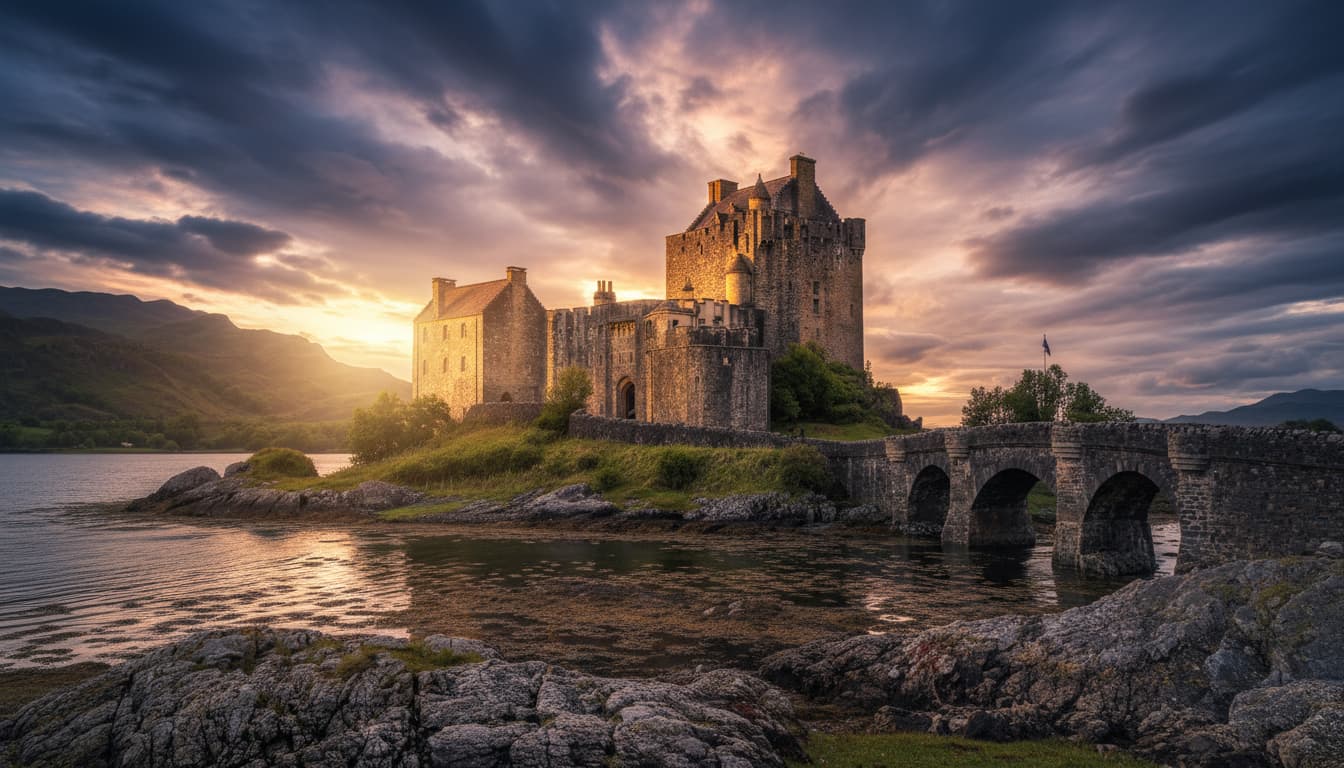
Just a few minutes’ drive from the heart of Kintail, this 13th-century castle sits at the point where three lochs meet. While it is one of the most photographed spots in Scotland, visiting early in the morning or late in the evening allows you to appreciate the architecture without the midday crowds.
The Applecross Peninsula
For those who enjoy a dramatic drive, the Bealach na Bà is a historic cattle pass that rises to over 2,000 feet via a series of Alpine-style hairpins. The views from the top across to the Isle of Skye are unparalleled.
Plockton
A short drive north takes you to the “Jewel of the Highlands.” Plockton is a sheltered village known for its palm trees (thanks to the North Atlantic Drift) and its calm, turquoise waters. It is an excellent spot for sea kayaking or a gentle coastal walk.
A Note on Responsible Tourism
The beauty of the Scottish Highlands is fragile. As visitors, we have a collective responsibility to preserve it for the future.
-
Leave No Trace: Ensure all litter is taken home.
-
Stay on Paths: To prevent erosion, particularly in peatland and mountain environments, stick to established trails where possible.
-
Support Local: Buying from local bakeries, artists, and guides ensures that the Highland communities remain vibrant and sustainable.
Conclusion: Finding Stillness in the Peaks
The Scottish Highlands are more than just a destination; they are an experience that demands you slow down. In Kintail, the mountains don’t just provide a backdrop—they dictate the pace of life. Whether you are scaling the heights of the Five Sisters or simply watching the rain curtains move across Loch Duich from the comfort of a well-appointed cottage, the region offers a rare opportunity to disconnect from the modern world and reconnect with nature.
Planning your journey here requires a balance of preparation and spontaneity. While you should map out your hikes and book your stay in advance, leave room for the moments that can’t be planned—the sudden appearance of a rainbow over a glen, or the silence of a mist-covered morning.
If you are ready to begin your Highland story, we invite you to explore the quiet corners of Kintail and discover the comfort of a home away from home.
Explore the beauty of the Highlands and find your perfect base at Innis-a-Chro Luxury Cottages.