
The transition from winter to spring in the north of Scotland is not a quiet affair. It is a visual and auditory awakening. The snowline gradually retreats to the highest peaks, the rivers swell with meltwater, and the glens shift from dormant russet tones to a vibrant, fresh green.

For those currently researching the best time of year to visit, the summer months often seem like the default choice. However, for nature-focused visitors, photographers, and those who appreciate a quieter, more unhurried pace, the months of March, April, and May hold a distinct advantage.

Choosing to explore Spring in the Scottish Highlands means catching the landscape at its most dynamic. If you are planning a journey to the West Coast and seeking a genuine connection with the environment, here are eight reasons why spring is the ideal season for a slow travel escape.


1. Highland Spring Weather is Surprisingly Mild (and Dry)

There is a persistent myth that Scotland is uniformly wet year-round. In reality, the changing of the seasons brings some of the most stable conditions you will encounter.

What is the weather like in the Scottish Highlands in spring?

Spring in the Scottish Highlands brings crisp, refreshing weather with average daytime temperatures ranging from 8°C to 13°C (46°F to 55°F). Statistically, April is one of the driest months of the year in Scotland. While passing rain showers are always a possibility, they frequently give way to bright, clear skies, making it an incredibly rewarding season for outdoor exploration.

Naturally, the Highlands command respect, and you may still experience four seasons in a single afternoon. The key to enjoying Highland spring weather is simply packing intelligently. Bringing reliable waterproofs and breathable layers allows you to comfortably embrace whatever the skies deliver, whether that is a sudden, dramatic flurry of sleet or a long, warm stretch of afternoon sunshine.

2. You Can Enjoy a Midge-Free Scotland

For many seasoned walkers, this is the single greatest benefit of a springtime visit. The Highland midge—a tiny, swarming insect that thrives in damp, still conditions—is a well-known feature of the Scottish summer.

However, midges typically do not begin to hatch until late May or early June. Travelling in March, April, or early May guarantees a midge-free Scotland. This absence fundamentally changes how you interact with the landscape. It allows you to sit by the edge of a sea loch for hours watching for otters, or to carefully set up a tripod in the damp ferns of a forest without the distraction of insect repellent and midge nets.

3. Unrivalled Scottish Highlands Photography Conditions

For landscape photographers, spring offers a golden window of opportunity. During the winter, the days are fleeting, and the light is often lost behind heavy cloud cover. In the height of summer, capturing the dawn requires waking at 3:00 AM, and the midday sun can cast a harsh, flat glare across the glens.

Scottish Highlands photography in spring provides the perfect balance. The golden hours of sunrise and sunset occur at entirely manageable times of the day. Furthermore, the light is incredibly crisp. The frequent rotation of passing showers and bright sunshine clears the atmosphere of haze.

When the dark, bruised clouds of a passing weather front part to let the sun illuminate the snow-capped ridges of the Five Sisters of Kintail, the resulting contrast is a photographer’s dream.

Top spring photography tips:

  • Embrace the weather: Do not put your camera away when it rains. The moments immediately following a downpour offer the most dramatic skies.

  • Focus on the details: Look beyond the grand vistas to capture the intricate frost on morning grass or the rushing water of a newly thawed burn.

  • Carry a microfibre cloth: Keep your lenses clear of spring drizzle to maintain sharp focus.


5 sisters of kintail viewpoint in spring

4. Prime Time for Wildlife in Spring

The lengthening days trigger a surge of activity across the hills and sea lochs. If you are interested in wildlife in spring, the Highlands are a globally significant destination.

Early in the year, you have a strong chance of witnessing the spectacular undulating display flights of golden eagles, which are highly active as they re-establish their territories. On the lower ground, red deer are still grazing in the sheltered glens before the warmer weather encourages them back up to the high corries, making them much easier to observe respectfully from a distance.

Along the kelp-strewn edges of the sea lochs, otters take advantage of the quiet mornings. Because the vegetation has not yet grown to its summer height, spotting these elusive mammals becomes noticeably easier. Meanwhile, migratory birds such as wheatears and ospreys begin to return to the birchwoods and lochs of the north, adding their calls to the warming air.

5. The Blooming of Spring Wildflowers in Scotland

As the soil warms, the ancient broadleaved woodlands and Celtic rainforests of the west coast undergo a profound transformation. The forest floor, dormant for months, erupts into colour.

Spring wildflowers in Scotland are a delicate but magnificent sight. You will find early dog violets and pale yellow primroses sheltering in the mossy crevices of drystone walls. By May, the true spectacle arrives: the blooming of the native Scottish bluebell (Hyacinthoides non-scripta). When the sunlight filters through the budding oak branches and hits a dense carpet of bluebells, it creates a scene of immense, quiet beauty. Unlike the cultivated varieties, the native bluebell possesses a distinctive, sweet scent that fills the damp woodland air.

6. Longer Days for Slow Travel Scotland

The clock change at the end of March instantly transforms the rhythm of a Highland day. By May, the region enjoys up to 15 hours of daylight.

This abundance of time is the cornerstone of slow travel Scotland. There is no need to rush your breakfast to beat the sunset, nor do you have to squeeze your itinerary into a tight, stressful schedule. You can afford to linger over a map, take the long route through a quiet glen, or simply stop the car to watch the tide turn in a sea loch. The extended evenings allow for long, restorative walks after dinner, listening to the twilight calls of returning seabirds.

7. Quieter Roads on the West Coast Scotland

The West Coast Scotland is renowned for its sweeping coastal routes and single-track roads. In the peak months of July and August, these routes naturally attract a large volume of international visitors.

Spring offers the landscape without the logistical congestion. The roads are quieter, the passing places are free, and you can pull over safely to admire the view without feeling pressured by traffic. Iconic historical sites, such as Eilean Donan Castle, can be explored with a sense of peace and intimacy that is difficult to find later in the year. It allows for spontaneous interactions with locals and a far more relaxed driving experience.

8. Kintail Offers the Perfect Grounding Point

To truly appreciate the nuances of a Highland spring, it is vital to have a base that feels deeply connected to the environment, rather than separate from it.

Kintail, where the mountains meet the sea lochs, serves as an exceptional anchor for exploration. It places you within immediate reach of high-ridge walks, ancient woodlands, and the rugged coastline. After a long day out in the bracing spring air—perhaps tracking a photography location or waiting patiently for a glimpse of an eagle—returning to a well-considered, comfortable cottage is essential.

There is a distinct comfort in shedding your hiking boots, lighting a warm fire, and watching the evening shadows lengthen across the glen from your own private space. It transforms a simple holiday into a restorative retreat.


Planning Your Spring Journey

The Scottish Highlands do not require you to conquer them; they simply ask that you observe them. Spring is the season that rewards the patient, the prepared, and the curious. By choosing to visit during these awakening months, you grant yourself the space to experience the landscape exactly as it should be experienced: wild, vivid, and deeply peaceful.

If you are currently planning a nature-focused escape and seeking a comfortable, authentic base in the heart of Kintail, we invite you to learn more about our accommodation and the surrounding landscape.

Discover your ideal Highland retreat at:
https://www.luxury-cottages-scotland.co.uk

The moment you crest the pass at the top of Glen Shiel and begin the long, winding descent toward Loch Duich, the character of the Scottish landscape shifts. The rolling moors of the central Highlands give way to something more vertical, more ancient, and undeniably more dramatic.

This is Kintail, a region often described as the gateway to the Isle of Skye, yet one that deserves far more than a fleeting glance from a car window.

For the traveller seeking a genuine connection with the landscape—the photographer chasing the “blue hour,” the hillwalker eyeing a jagged ridgeline, or the soul in need of slow travel in Scotland—Kintail offers a rare sense of scale. It is a place where the mountains don’t just sit on the horizon; they loom directly over the sea lochs, creating a theatre of light, water, and stone.

In this guide, we explore why Kintail and the surrounding Northwest Highlands represent the pinnacle of the Scottish wilderness experience and how to immerse yourself in its quiet, rugged beauty.


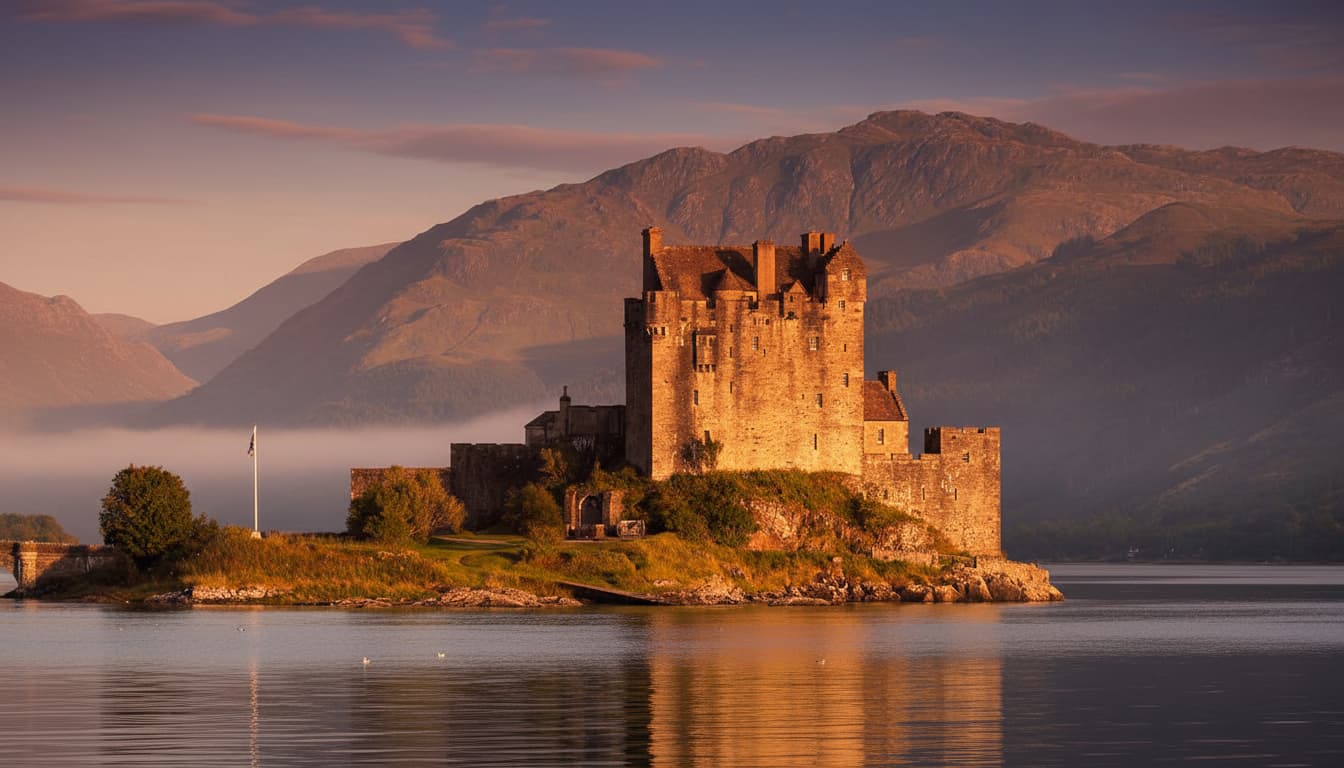
Eilean Donan Castle

Why Kintail is the Soul of the Northwest Highlands

Kintail is defined by its geography. Located in Wester Ross, it is home to some of the most iconic mountain silhouettes in Britain.

The area is dominated by the Five Sisters of Kintail, a high-level ridge walk that comprises five distinct peaks, three of which are classified as Munros (mountains over 3,000 feet).

Unlike the more manicured landscapes of the south, Kintail feels visceral.

The weather patterns here move quickly, driven by the Atlantic, meaning a single afternoon can transition from moody, mist-shrouded glens to piercingly clear sunlight that turns the heather a vibrant copper. For those exploring the Kintail mountains, the reward is a landscape that feels lived-in yet wild, steeped in clan history and geological drama.

The Appeal of Slow Travel

In recent years, the “North Coast 500” has brought many visitors to the north, but the true essence of the Highlands is often missed in the rush to tick off waypoints. Kintail encourages a different pace. By choosing a single base in a quiet glen, you allow the rhythms of the Highlands to reveal themselves—the stag roaring in the glen during the autumn rut, the tide receding in Loch Duich, or the sudden appearance of a golden eagle above the crags.


Essential Experiences: Hillwalking and Landscapes

For many, a trip to Kintail is synonymous with hillwalking in the Northwest Highlands. The terrain here is challenging but offers some of the most spectacular views in the British Isles.

The Five Sisters of Kintail

This is the “bucket list” hike for many experienced walkers. The ridge stretches for several miles, offering a panoramic view that encompasses the Cuillin of Skye to the west and the vast wilderness of Monar to the east.

  • Difficulty: High. This is a full day’s expedition requiring navigation skills and physical stamina.

  • The Reward: A bird’s-eye view of the sea lochs and a profound sense of isolation.

The Falls of Glomach

Hidden away in the folds of the mountains is one of Britain’s highest and most impressive waterfalls. Reaching the Falls of Glomach requires a dedicated trek, as there is no road access.

The sheer drop of 113 metres into a narrow, dark gorge is a sobering reminder of the power of the Highland elements. It is a place of raw, untamed energy, far removed from the more accessible tourist spots.

Glen Elchaig and the Hidden Valleys

For those preferring a lower-level experience, the glens around Kintail offer miles of tracks perfect for mountain biking or long, contemplative walks. Glen Elchaig is a prime example of a “hidden” Highland glen, where the lack of traffic allows wildlife to thrive.


A Photographer’s Guide to Kintail

If you are a photographer, Kintail is an endless canvas. The combination of salt water and high peaks creates atmospheric conditions that are unique to the West Coast.

Capturing the Light

The “golden hour” in the Highlands is elongated, especially in the late spring and early autumn. Because the mountains are so steep, shadows play a significant role in your compositions.

  • Loch Duich at Dawn: The water is often glass-calm in the early morning, providing perfect reflections of the Five Sisters.

  • The Ratagan Pass: For a classic wide-angle shot, drive up the Ratagan Pass toward Glenelg. From the viewpoint, you can see the entire Kintail range reflected in the loch below.

  • Winter Clarity: While the days are shorter, the winter light in Kintail is exceptionally crisp. With snow on the peaks and a low sun, the textures of the rock and grass are highlighted in ways that summer light cannot replicate.

Pro Tip: Don’t pack your camera away when the clouds roll in. Some of the most “Scottish” images are captured during the “gloaming”—that period of twilight where the mist clings to the hillsides, creating layers of depth and mystery.


Clan MacRae Statue


History Etched in Stone

Kintail is not just a natural wonder; it is a landscape shaped by centuries of human drama. The area was traditionally the heartland of the Clan MacRae, known as the “Constables of Eilean Donan.”

Eilean Donan Castle

Located just a few miles from the heart of Kintail, Eilean Donan Castle is perhaps the most photographed castle in the world. While it is popular with tourists, visiting early in the morning or late in the evening allows you to appreciate its strategic importance. It sits at the meeting point of three great sea lochs: Loch Duich, Loch Long, and Loch Alsh.

The Battle of Glenshiel

In 1719, the steep slopes of Glen Shiel were the site of a significant Jacobite rising battle. You can still visit the site today, where Spanish soldiers fought alongside Highland clansmen against government forces.

The ruggedness of the terrain played a crucial role in the conflict, and standing on the valley floor, you can easily imagine the scale of the struggle.


Practical Information for Your Visit

Planning a trip to the Northwest Highlands requires a bit more foresight than a city break. The remoteness is part of the charm, but logistics matter.

When to Visit

  • Spring (May – June): Often the driest months with the fewest midges. The days are long, and the hills begin to green.

  • Summer (July – August): The busiest time, but the landscapes are lush. Be prepared for the Scottish midge—insect repellent and head nets are wise additions to your kit.

  • Autumn (September – October): Perhaps the most beautiful season. The hills turn gold and orange, the air is crisp, and the deer are active.

  • Winter (November – March): A time for the serious adventurer. The peaks are frequently snow-capped, requiring crampons and ice axes for high-level walks. However, the glens remain accessible for those seeking solitude and a roaring fire at the end of the day.

Getting Around

While there is a bus service (the Citylink 915/916) that runs from Glasgow and Inverness to Skye via Kintail, a car is highly recommended for those wanting to explore the more remote trailheads. The A87 is the main artery, but the single-track roads leading into the glens are where the true discoveries are made.


Finding Your Base: The Luxury of Stillness

When researching where to stay in Kintail, the choice of accommodation significantly impacts your experience. The goal of slow travel is to reduce the “friction” of travel—to stop unpacking and repacking and instead inhabit a place.

Staying locally, particularly in a glen-based setting like Innis-a-Chro, allows you to witness the landscape’s nuances. Rather than driving to see the mountains, you live amongst them. There is a profound difference between seeing the Five Sisters from a viewpoint and waking up to see the mist lifting off their lower slopes from your window.

Choosing a self-catering base provides the freedom to eat on “Highland time.” You aren’t beholden to hotel breakfast hours; you can head out at 4:00 AM for a sunrise shoot or return late from a long day on the Munros and relax in a space that feels like home.


Beyond Kintail: Day Trips into Wester Ross and Skye

While Kintail has enough to keep an explorer busy for weeks, its central location makes it a perfect hub for wider exploration of the Northwest Highlands.

  1. The Applecross Peninsula: A drive over the Bealach na Bà (Pass of the Cattle) is one of the most famous road journeys in Scotland, offering Alpine-style hairpins and views across to the Outer Hebrides.

  2. The Isle of Skye: The Skye Bridge at Kyle of Lochalsh is only a 15-minute drive from Kintail. You can easily spend a day exploring the Quiraing or the Fairy Pools before returning to the quieter, less crowded mainland for the evening.

  3. Plockton: Known as the “Jewel of the Highlands,” this charming village sits on a sheltered bay with palm trees (thanks to the North Atlantic Drift) and is a wonderful spot for a seafood lunch.


Conclusion: The Lasting Impact of the Highlands

The Scottish Highlands are often romanticised in film and literature, but the reality is far more complex and rewarding. Kintail does not offer the easy, manicured beauty of a park; it offers a landscape that demands respect and rewards curiosity.

Whether you are standing on the summit of Sgùrr Fhuaran looking out over the Atlantic or simply sitting by a stream in a quiet glen, the area has a way of resetting your internal clock. It is a place for discovery—of the land, of history, and of a slower, more intentional way of moving through the world.

As you plan your journey, remember that the Highlands are best experienced not by the number of miles you cover, but by the moments of stillness you find along the way.


Are you ready to discover the quiet side of the Highlands?

If you are looking for a refined, peaceful retreat to serve as your gateway to this incredible landscape, explore the possibilities of a stay in the heart of the mountains.

Find your perfect Highland base at Innis-a-Chro Luxury Cottages.

Explore the Scottish Highlands with confidence and clarity. This Scottish Highlands travel guide for Nordic travellers is tailored to readers from Sweden, Denmark, Norway, Iceland and Finland seeking practical steps to plan, book and enjoy an unforgettable trip. You’ll find routes into Scotland, airline options, onward transport to the Highlands, and essential local insights that make your journey smoother from start to finish.

Why Visit the Scottish Highlands from the Nordics

The Scottish Highlands offers dramatic landscapes, rugged coastlines, deep glens, historic castles and wildlife that rivals anything in Scandinavia. This guide explains how to turn curiosity into plans with clear travel options, trusted carriers, and efficient transfer routes. Whether you’re seeking scenic road trips, whisky trails, or Northern Lights-like skies, this article helps Nordic travellers plan intelligently.

Best Airports to Fly From in Northern Europe

Travellers from the Nordics typically connect to major Scottish gateways in Edinburgh and Glasgow before heading north. These airports offer most international connections and competitive fares.

Edinburgh Airport (EDI)

Edinburgh Airport is Scotland’s busiest international hub. Flights from Stockholm, Copenhagen, Oslo and Helsinki arrive daily, often with direct or single-stop services. Edinburgh has excellent onward rail links to Inverness and the Highlands. According to Edinburgh Airport’s schedules, up to 50 airlines operate year-round to Nordic destinations (source: Edinburgh Airport flight schedules).

Glasgow Airport (GLA)

Glasgow serves as another major gateway, especially for west Highland routes. Several carriers fly from Copenhagen, Oslo and Stockholm via direct or connecting services. Glasgow’s rail and coach links reach scenic points like Fort William and Oban, ideal for island and mountain excursions.

Secondary Options: Aberdeen (ABZ)

Aberdeen Airport may be less frequented by Nordic flights but can be worthwhile, particularly for connections via Amsterdam or London with carriers like KLM or British Airways.

Carriers and Routes From the Nordics

Here is a comparison of typical carriers and routing options from major Nordic capitals to Edinburgh and Glasgow in 2026:

Departure City Common Carriers Typical Routing Notes
Stockholm (ARN) SAS, Norwegian Direct to EDI/GLA; via CPH/OSL Direct often seasonal
Copenhagen (CPH) Scandinavian Airlines, Ryanair Direct to EDI; stop in UK Budget options available
Oslo (OSL) SAS, Norwegian Direct to EDI; via CPH Frequent departures
Helsinki (HEL) Finnair, Lufthansa Via FRA/MUC to EDI/GLA Best for winter travel
Reykjavik (KEF) Icelandair KEF to EDI/GLA Good for multi-stop tours

Routes change seasonally and low-cost options like Ryanair may add services in summer. Check timetables with the official airport flight schedule pages for Edinburgh and Glasgow before booking.

From Edinburgh and Glasgow to the Highlands

Once you land in Scotland, several reliable ground options connect you northward.

Train Services

Scotland’s rail network offers scenic, direct links from Edinburgh Waverley and Glasgow Queen Street to Inverness, Fort William and beyond. Trains to Inverness take around 3.5 to 4 hours from Edinburgh, offering countryside views as you ascend into the Highlands. Book tickets in advance at ScotRail for best fares and seat reservations.

Coaches and Buses

National Express and Megabus operate services northwards, typically cheaper but slower than rail. Coaches serve places like Aviemore, Fort William and Ullapool. They are useful if you’re on a tighter budget and flexible with travel times.

Car Hire

Hiring a car offers freedom to explore remote glens and coastal roads. All major international fleets have desks at EDI and GLA. Roads like the A9 north to Inverness and the NC500 coastal loop are iconic but can be narrow and winding. Plan time for relaxed driving and frequent photo stops.

Planning Your Highland Adventure

Once you’re in the Highlands, here are tips to make the most of your time:

Season and Weather

Highland weather is famously changeable. Summer (June to August) gives long daylight and milder temperatures, while shoulder seasons offer quieter roads and better value. Winter can be dramatic but challenging; check Met Office forecasts before travelling.

Accommodation

From B&Bs in Inverness to castles-with-rooms and remote lodges on the west coast, book early. Many Nordic travellers appreciate self-catering cottages for flexibility and space.

You’ll also find a small number of independent Highland retreats offering higher-end stays with privacy and character. One example is Innis a Chro Luxury Cottages, a collection of thoughtfully designed self-catering cottages set in the heart of the Highlands, ideal for travellers seeking seclusion, comfort and direct access to nature. Learn more at: https://luxury-cottages-scotland.co.uk

The following video highlights some of the luxurious features found at Innis a Chro Luxury Cottages on Scotland’s stunning West Coast.


Key Experiences

Loch Ness cruises, whisky distillery tours, coastal hikes around Torridon and wildlife safaris are perennial favourites. Local tourism authorities like VisitScotland maintain up-to-date guides on experiences and events.

Quick Comparison: Rail, Coach or Rental Car

Transport Speed Cost Flexibility
Train Fast Medium-high Limited to routes
Coach Slow Low Moderate
Car hire Moderate Variable Very high

This table helps clarify what each option delivers. Most Nordic travellers choose a mix: rail to Inverness then car hire for local exploration.

Essential Checklist Before You Go

Before concluding, here are key points to finalise:

A valid passport and travel insurance

Flight bookings with clear arrival/departure times

Train or car hire reservations

Accommodation confirmations

Local currency and payment options

Good planning reduces stress and lets you enjoy the rugged beauty of the Highlands fully.

Scotland Travel Tips for Nordic Visitors

This list highlights practical tips to elevate your trip:

Choose flights with flexible change options in case of weather delays.

Check ScotRail advance fares for long-distance trains.

Consider an international roaming plan or local SIM for rural coverage.

Respect local speed limits and single-track road etiquette.

Explore local food and drink traditions beyond Edinburgh and Glasgow.

Frequently Asked Questions

What is the best airport to fly into for accessing the Scottish Highlands?

Edinburgh Airport generally offers the most direct Nordic connections and best onward links by rail and road to the Highlands.

Can I reach Inverness by train from Edinburgh or Glasgow?

Yes, ScotRail operates direct services that take approximately 3.5–4 hours from Edinburgh and similar times from Glasgow with a change.

Is car hire recommended for exploring the Highlands?

Car hire provides the most flexibility, especially for remote areas, but requires comfort with rural driving conditions.

Meta title: Scottish Highlands Travel Guide for Nordic Travellers 2026

Meta description: Ultimate Scottish Highlands travel guide for Nordic visitors with tips on flights, carriers, transport from Edinburgh/Glasgow, and planning essentials.

This article aligns with informational and transactional intent by offering actionable routing, carrier options, and travel planning steps that help Nordic readers move from research to booking. For latest flight connections and schedules, refer to official airport timetables and airline booking pages to ensure accuracy at the time of travel.


If 2025 was about “revenge travel,” 2026 is about the Great Reset. As the world gets louder, the most sought-after luxury isn’t a gold-plated lobby; it’s the sound of absolutely nothing. Welcome to the era of Hushpitality, and there is no better place to experience it than at Innis-a-Chro Croft Cottages.

Nestled at the foot of the legendary Five Sisters of Kintail, Innis-a-Chro offers more than just a place to sleep—it offers a front-row seat to the “Radical Remoteness” trend sweeping the Highlands this year.

1. The Rise of the “Saunacation”

One of the biggest travel trends of 2026 is the Saunacation—travellers specifically seeking high-end thermal experiences in nature. While others are crowding public spas, Innis-a-Chro guests enjoy a private sauna and hot tub with floor-to-ceiling views of the rugged peaks.

After a day of “Coolcationing”—another 2026 trend where travellers head north to escape the southern summer heat—there is nothing quite like retreating to a glass-fronted sauna to watch the mist roll over the glens.

2. Local Magic: More Than Just a Photo Op

While Innis-a-Chro feels worlds away, it sits at the heart of the Highlands’ most iconic landmarks.

  • Eilean Donan Castle: Recently ranked as the second most magical castle in Europe, this 13th-century icon is just a short drive away.

  • The Viking Legacy: 2026 marks a major milestone for the nearby village of Kyle of Lochalsh, with the completion of the Viking Living Village at The Plock. It’s a fascinating, immersive look at the Norse history that shaped this coastline.

  • The Falls of Glomach: For those seeking “Meaningful Exploration,” the hike to one of Britain’s highest waterfalls is essentially in your backyard.

The following video shows some of the breathtaking scenery that surrounds Innis a Chro Luxury Cottages.

3. Luxury in the Details

In 2026, travelers are moving away from “fast tourism” and toward quality. Innis-a-Chro hits every mark:

  • Sustainable Warmth: Underfloor heating and roaring log burners for those crisp Highland nights.

  • Design-Led Interiors: High-spec kitchens and bespoke furnishings that prove “remote” doesn’t have to mean “rustic.”

  • Wildlife at the Window: With rare species sightings on the rise in nearby Torridon and the Kintail estate, you might spot a Golden Eagle or a Red Deer without even leaving your king-sized bed.


The 2026 Verdict: Whether you’re here to conquer the Five Sisters or simply to master the art of doing nothing in a private sauna, Innis-a-Chro is the definitive Highlands escape for the modern traveler.


Planning your 2026 escape?

Spaces for the summer “Coolcation” season and autumn “Saunacation” months fill up fast.

Check availability and book your stay at Innis-a-Chro Croft Cottages here.